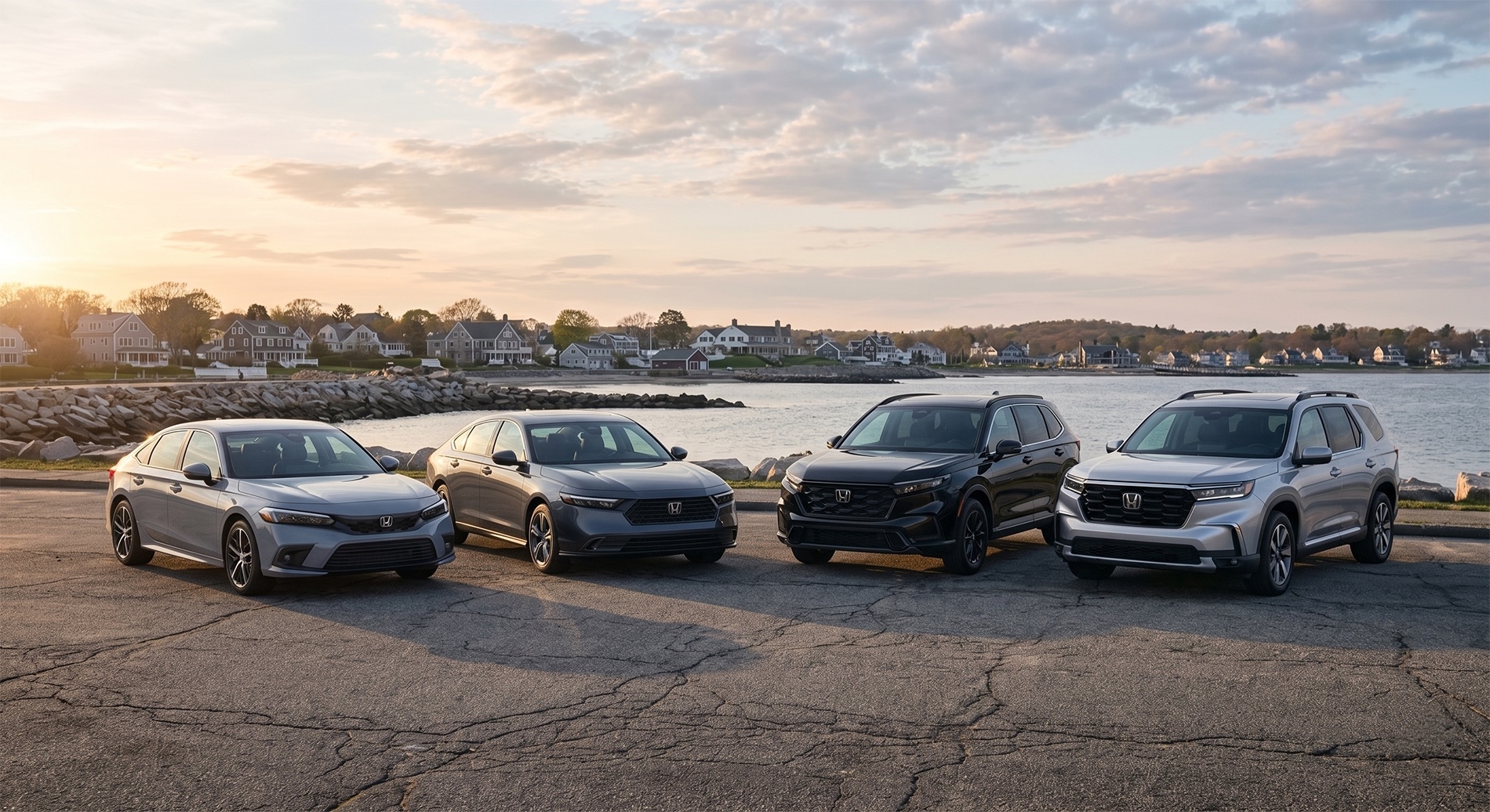
Honda MPG Comparison Guide
Compare Honda MPG Ratings, Understand Real Fuel Costs & Find the Model That Actually Fits How You Drive Every Day.
Fuel economy shapes more decisions than it used to, but not in a simple way. The highest MPG number on paper does not always translate to the lowest fuel cost in real life. What matters is how a vehicle uses fuel during the kind of driving you actually do—short trips, restarts, longer stretches, and everything in between.
This guide comes from the perspective of working directly with drivers across Brockton, Seekonk, Dartmouth, New Bedford, Fall River, Bridgewater, and Taunton, where driving rarely fits into one clean pattern. Routes fill up quickly, short trips stack together, and a typical day often includes more stops than steady stretches. Those patterns change how MPG shows up over time, and they play a major role in which Honda models actually save money week to week.
Honda’s lineup makes those differences clear once you break it down. Smaller cars focus on staying efficient across constant use. Hybrids change how fuel is used during stop-and-go driving. SUVs hold efficiency while adding space and capability. Trucks and larger vehicles shift the balance again, while still keeping fuel use within a range that works for daily driving. And then the Prologue steps outside of gas entirely.
Below, you’ll find MPG comparison tables across the full Honda lineup, along with trim-level breakdowns and context around how each model behaves in real driving conditions. The goal is not just to show numbers—it’s to help you understand what those numbers mean for your routine so you can choose a Honda that actually reduces fuel cost over time.
View Quick Answers About Honda MPG & Fuel Use ▼
Why can a lower MPG car sometimes cost the same to drive?
Because driving patterns matter. A vehicle that performs well in steady conditions can match real-world fuel use with a higher MPG model if your driving avoids frequent stops and short trips.
What kind of driving benefits most from hybrid technology?
Frequent stops, slow movement, and short trips benefit the most. Hybrids recover energy during braking and reuse it, which keeps fuel use down in conditions that normally increase it.
Does vehicle size always mean worse fuel economy?
Not always. Larger vehicles use more fuel overall, but many Honda SUVs are designed to stay within a predictable range so they remain practical for everyday use.
What does MPGe actually tell you?
MPGe shows how efficiently an electric vehicle uses energy compared to gas vehicles. It reflects energy consumption, not fuel usage, and helps estimate overall operating cost.
What matters more: city MPG or combined MPG?
Combined MPG gives a better overall picture, but city MPG becomes more important if most of your driving includes stops, traffic, and short distances.
Why Fuel Economy Matters More When Gas Prices Rise
When gas prices climb, the difference between vehicles doesn’t stay theoretical—it shows up immediately in how often you’re stopping to fill up and how much each visit costs. What used to feel like a small gap in MPG starts to separate into real dollars over the course of a week, especially when driving isn’t perfectly consistent.
Most days aren’t built around one clean commute. They’re made up of short drives, resets, traffic, and constant changes in pace. That kind of driving tends to use more fuel, which makes efficiency matter even more. Vehicles that hold strong MPG in those conditions keep fuel use from creeping up as the week fills in.
That’s where Honda’s lineup stands out. Hybrid models reduce fuel use in the exact moments where it normally spikes. Sedans keep consumption low across steady driving. SUVs and trucks hold fuel use within a controlled range even as they take on more space, passengers, and capability. Each approach answers the same problem in a different way.
As fuel prices rise, the goal shifts from simply getting good mileage to keeping fuel costs predictable. The right vehicle doesn’t just use less fuel—it stays consistent no matter how your driving changes. That consistency is what makes MPG matter most when every fill-up starts to count.
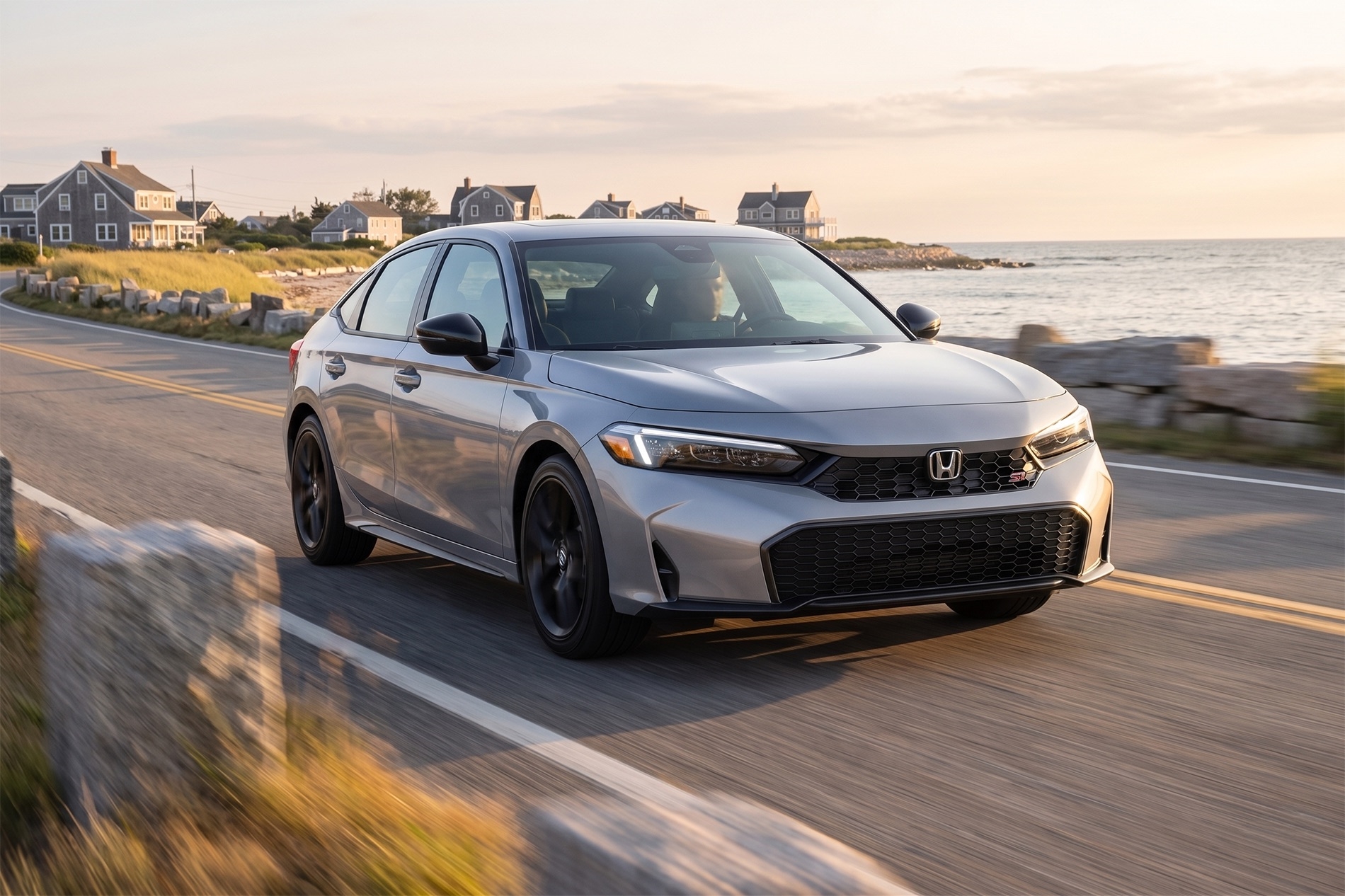
Honda’s Reputation for Fuel Efficiency
Honda built its reputation on making vehicles that stay efficient without asking drivers to think about it. The focus has never been just on hitting a high MPG number—it’s been about keeping fuel use controlled across the kind of driving people actually do every day. That’s why the lineup feels consistent, whether you’re in a compact sedan, a hybrid, or a larger SUV.
Over time, that approach has carried across every segment. Civic and Accord models continue to deliver strong efficiency for drivers who spend a lot of time on the road. Hybrid systems add another layer by improving fuel use in stop-and-go conditions instead of only rewarding steady highway driving. SUVs like the CR-V and HR-V keep that efficiency in place while adding space and versatility, which is where many vehicles typically start to lose it.
Even as the lineup expands into trucks, three-row SUVs, and fully electric models, the same idea holds. The Ridgeline keeps fuel use closer to an SUV than a traditional truck. The Pilot and Passport stay within a predictable range for their size. The Prologue removes gas from the equation entirely. Each vehicle answers a different need, but they all stay anchored to the same goal—keeping energy use manageable over time.
That consistency is what defines Honda’s reputation. No matter which direction a driver goes in the lineup, efficiency remains part of the equation without becoming something they have to work around.
Honda Models With The Best MPG
City, highway, and combined fuel economy by model and trim
Honda Models MAX MPG COMPARISON ▼
| Honda Max EPA MPG Comparison |
| Honda Vehicle |
Gas (City / Highway) |
Hybrid (City / Highway) |
Max Combined MPG |
| Accord Sedan |
29 / 37 |
51 / 44 |
48 |
| Civic Sedan |
32 / 41 |
50 / 47 |
49 |
| Civic Hatchback |
30 / 38 |
50 / 45 |
48 |
| CR-V |
28 / 33 |
43 / 36 |
40 |
| HR-V |
26 / 32 |
— |
28 |
| Pilot |
19 / 27 |
— |
22 |
| Passport |
19 / 25 |
— |
21 |
| Ridgeline |
18 / 24 |
— |
21 |
| Odyssey |
19 / 28 |
— |
22 |
| Prelude Hybrid |
— |
46 / 41 |
44 |
| Prologue |
— |
113 / 94 MPGe |
104 MPGe |
Most people don’t walk in asking for “the highest MPG.” They come in trying to figure out what they can realistically drive every day without feeling it at the pump. That’s what this table actually answers. It shows how far you can stretch different types of vehicles before fuel cost starts to push back.
If the goal is to keep day-to-day driving as inexpensive and predictable as possible, the Accord and Civic hybrids sit at the top for a reason. These are the cars people lean on when they’re commuting consistently, running errands throughout the week, and just don’t want fuel to be something they think about. Around places like Brockton or New Bedford, where most trips are short and broken up by traffic, those higher city numbers tend to show up in a real way over time.
Where things get more interesting is the middle of the chart. The CR-V Hybrid doesn’t compete with the sedans on MPG, but it solves a different problem. A lot of drivers want the space, seating position, and flexibility of an SUV, but they don’t want to double their fuel cost to get it. That’s exactly where something like a CR-V Hybrid fits—it keeps fuel use controlled while still handling everything from weekday errands to loading up for a weekend out toward the coast.
Then you have vehicles like the HR-V, which land in a different kind of sweet spot. It’s not chasing hybrid-level efficiency, but it still keeps fuel use reasonable for someone who wants a small SUV without stepping into a more complex powertrain. For drivers who just want something simple, practical, and easy to live with day after day, that balance tends to make more sense than maximizing MPG at all costs.
The bottom half of the table—Pilot, Passport, Ridgeline, and Odyssey—is where the decision changes completely. No one is cross-shopping these with a Civic Hybrid. These are vehicles people choose because they need the space, the seating, or the capability. The question isn’t “is this the most efficient option?” It’s “how much fuel am I taking on to get what I need?” What stands out here is that even with that added size and function, fuel use stays manageable enough that these vehicles still work as daily drivers, not just occasional-use options.
The Ridgeline is a good example of that shift. For someone who needs a truck for projects, gear, or weekend use, this kind of MPG means you’re not paying a full-size truck penalty every time you drive to work or run across town. It opens the door to owning a truck without turning every fill-up into a decision point.
At the far end, the Prologue changes the conversation entirely. MPGe isn’t something most people track closely, but what it really means is that fuel cost becomes far less tied to how much you drive. For someone with a steady routine and access to charging, that can remove fuel from the equation almost completely.
What this chart shows more than anything is range of choice. Whether someone is trying to minimize fuel cost, balance it with space, or keep it reasonable while getting capability, there’s a version of that decision here. The right answer depends less on the number itself and more on what you’re trying to make work in your day-to-day driving.
Honda Accord MPG BY TRIM ▼
| Honda Accord MPG By Trim |
| Accord Sedan Trim |
Powertrain |
City MPG |
Highway MPG |
Combined MPG |
| LX |
Gas |
29 |
37 |
32 |
| SE |
Gas |
28 |
36 |
31 |
| Sport Hybrid |
Hybrid |
46 |
41 |
44 |
| EX-L Hybrid |
Hybrid |
51 |
44 |
48 |
| Sport-L Hybrid |
Hybrid |
46 |
41 |
44 |
| Touring Hybrid |
Hybrid |
46 |
41 |
44 |
The Accord fits drivers who rely on one car to handle the full week without compromise, and its MPG backs that up across every trim. The gas models already keep fuel use controlled, especially once you get moving at a steady pace. After clearing the usual backups along Route 24, the Accord settles in and holds efficiency without needing constant attention.
The hybrid trims take advantage of the kind of driving that actually eats fuel around here. Sitting through stacked lights on Route 6, inching forward near on-ramps, and restarting the car multiple times in a day all push city driving conditions. The EX-L Hybrid stands out in those moments. It keeps fuel use from climbing when the car isn’t moving cleanly, so a full week of short trips and stops doesn’t turn into extra fill-ups.
Every hybrid trim holds strong MPG, so the decision shifts away from fuel economy once you’re in that lineup. At that point, it comes down to how you want the car equipped and how it feels over time. The Accord delivers consistent efficiency either way, which is exactly why it works so well as a daily driver that doesn’t need to be second-guessed.
Honda Civic Sedan MPG BY TRIM ▼
| Honda Civic Sedan MPG |
| Civic Sedan Trim |
Powertrain |
City MPG |
Highway MPG |
Combined MPG |
| LX |
Gas |
32 |
41 |
36 |
| Sport |
Gas |
31 |
39 |
34 |
| Sport Hybrid |
Hybrid |
50 |
47 |
49 |
| Sport Touring Hybrid |
Hybrid |
50 |
47 |
49 |
The Civic fits drivers who stay in motion all day and want a car that responds quickly without adding extra effort. It’s easy to place in tighter spots, easy to turn around when plans change, and it keeps fuel use low even when the day breaks into short, repeated trips.
The gas trims handle that kind of routine cleanly. You can run out, stop, restart, and keep moving without watching your fuel level drop faster than expected. It stays efficient without needing long stretches of open road to get there, which is exactly how most days actually play out.
The hybrid trims build on that same pattern and make it more efficient. Every slow roll forward, every light cycle, and every reset becomes part of how the car manages energy. Instead of losing fuel in those moments, it recaptures it and keeps overall use steady. That’s why the combined MPG climbs into the high 40s without changing how the car is driven.
Both hybrid trims deliver the same MPG, so the decision comes down to how you want the Civic equipped and how it feels over time. The efficiency stays consistent either way. The Civic works for drivers who want something responsive, manageable, and consistently efficient across a full day of real driving.
Honda Civic Hatchback MPG BY TRIM ▼
| Civic Hatchback MPG |
| Civic Hatchback Trim |
Powertrain |
City MPG |
Highway MPG |
Combined MPG |
| Sport |
Gas |
30 |
38 |
34 |
| Sport Hybrid |
Hybrid |
50 |
45 |
48 |
| Sport Touring Hybrid |
Hybrid |
50 |
45 |
48 |
The Civic Hatchback tends to get picked by people who use their car for more than just getting around. Groceries, gear, bags, things that don’t fit cleanly in a trunk—this is where the shape of the car starts to matter. The liftback design changes how often you rely on the car, not just how you drive it.
That added use shows up in fuel patterns. Loading the car, making a quick stop, heading back out again—those short, repeat drives stack up fast. The gas Sport trim keeps that kind of usage efficient without needing ideal conditions. You don’t have to plan your driving to stay within a certain range. It just stays consistent.
The hybrid trims step in when that routine becomes constant. A day filled with short runs, pauses, and restarts creates opportunities for the system to recover energy and reuse it. Over time, that keeps fuel use from creeping up, even when the car gets used more often and for more purposes than a typical sedan.
Both hybrid trims hold the same MPG, which makes the decision straightforward. You’re choosing how you want the car set up, not whether it will stay efficient. The Civic Hatchback works for drivers who expect their car to handle a wider range of tasks while still keeping fuel use firmly under control.
Honda CR-V MPG BY TRIM ▼
| CR-V MPG |
| CR-V Trim |
Drivetrain & System |
City MPG |
Highway MPG |
Combined MPG |
| EX |
2WD CVT |
28 |
33 |
30 |
| EX |
AWD CVT |
27 |
31 |
29 |
| EX-L |
2WD CVT |
28 |
33 |
30 |
| EX-L |
AWD CVT |
27 |
31 |
29 |
| Sport Hybrid |
2WD Two-Motor Hybrid System |
43 |
36 |
40 |
| Sport Hybrid |
AWD Two-Motor Hybrid System |
40 |
34 |
37 |
| TrailSport Hybrid |
AWD Two-Motor Hybrid System |
38 |
33 |
35 |
| Sport-L Hybrid |
2WD Two-Motor Hybrid System |
43 |
36 |
40 |
| Sport-L Hybrid |
AWD Two-Motor Hybrid System |
40 |
34 |
37 |
| Sport Touring Hybrid |
AWD Two-Motor Hybrid System |
40 |
34 |
37 |
The CR-V usually shows up at a turning point. Space starts to matter more. Plans involve more than just getting from one place to another. The car becomes something you rely on for people, gear, and whatever the day turns into. The question isn’t whether an SUV fits—it already does. The real question is what it costs you to live with one every day.
This is where the CR-V separates itself. It carries the extra room, the higher driving position, and the flexibility people want, without letting fuel use drift out of control. The gas trims hold that balance in a straightforward way. They give drivers a larger footprint and more usability while keeping fuel consumption steady enough that the vehicle still feels practical during a full week of use.
The hybrid models push that balance further. They take the kind of driving that fills up a schedule—constant stops, short resets, uneven pacing—and keep it from turning into higher fuel usage. Instead of asking you to change how you use the vehicle, they adapt to it. That’s why the jump into the 40 MPG range matters here. It doesn’t just improve efficiency—it removes the usual tradeoff that comes with moving into an SUV.
Each version of the CR-V answers the same need in a slightly different way, but they all land in the same place. You get the space and flexibility that make an SUV worth owning, without second-guessing the fuel side of it. That’s what makes the CR-V such an easy decision for so many drivers—it fits the next stage of how they use a vehicle and keeps everything else in check.
Honda HR-V MPG BY TRIM ▼
| HR-V MPG |
| HR-V Trim |
Drivetrain |
City MPG |
Highway MPG |
Combined MPG |
| LX |
2WD CVT |
26 |
32 |
28 |
| LX |
AWD CVT |
25 |
30 |
27 |
| Sport |
2WD CVT |
26 |
32 |
28 |
| Sport |
AWD CVT |
25 |
30 |
27 |
| EX-L |
2WD CVT |
26 |
32 |
28 |
| EX-L |
AWD CVT |
25 |
30 |
27 |
The HR-V makes sense the moment a sedan starts to feel limiting but a larger SUV still feels like too much. It keeps everything compact, easy to manage, and efficient, while quietly adding the space and flexibility that people start needing more often. It’s the kind of vehicle that fits into your routine without forcing you to rethink it.
Across every trim, the HR-V holds a tight, consistent MPG range. That consistency is the advantage. Whether you choose 2WD or AWD, the fuel use stays predictable, so adding capability doesn’t suddenly change what it costs to drive every day. For drivers who want the confidence of all-wheel drive without giving up efficiency, that balance lands exactly where it needs to.
The way the HR-V gets used is different from both smaller cars and larger SUVs. It handles quick stops, tight parking areas, and constant direction changes without effort, and it keeps fuel use in check while doing it. There’s no need to chase the highest MPG number because the entire lineup stays efficient in real conditions, not just ideal ones.
The result is a vehicle that feels simple in the best way. Every trim delivers the same core experience—compact size, usable space, and steady fuel economy—so the decision comes down to how you want it equipped. The HR-V fits drivers who want to step into something more versatile while keeping everything about daily driving easy to manage.
Honda Odyssey MPG BY TRIM ▼
| Odyssey MPG |
| Odyssey Trim |
Transmission |
City MPG |
Highway MPG |
Combined MPG |
| EX-L |
10-Speed Automatic Transmission |
19 |
28 |
22 |
| Sport-L |
10-Speed Automatic Transmission |
19 |
28 |
22 |
| Touring |
10-Speed Automatic Transmission |
19 |
28 |
22 |
| Elite |
10-Speed Automatic Transmission |
19 |
28 |
22 |
The Odyssey isn’t chosen for a single type of drive. It gets picked because it has to handle everything in one day without slowing down the people inside it. Seats fill up, cargo stacks up, plans change, and the vehicle just keeps going. That’s the role it plays, and its fuel economy is built to support that kind of use.
Every trim delivers the same MPG, which simplifies the decision immediately. There’s no tradeoff between features and fuel use. You can step into a higher trim for comfort, technology, or convenience and know the cost to drive it stays exactly the same. That consistency is what makes the Odyssey easy to commit to.
The way a minivan gets used is different from anything else in the lineup. It’s rarely one clean drive. It’s a series of stops, pickups, drop-offs, and quick resets. Doors open, close, open again. The engine cycles through short bursts and longer stretches, and fuel use needs to stay controlled through all of it. The Odyssey handles that pattern without becoming expensive to run, even as the vehicle carries more weight and does more work than a typical SUV.
What stands out is how predictable it stays. No matter how full the cabin gets or how busy the schedule becomes, the MPG holds steady across the lineup. The Odyssey fits drivers who need maximum space and flexibility, while still keeping fuel use reasonable for something that does as much as it does every single day.
Honda Pilot MPG BY TRIM ▼
| Pilot MPG |
| Pilot Trim |
Drivetrain |
City MPG |
Highway MPG |
Combined MPG |
| EX-L |
2WD |
19 |
27 |
22 |
| EX-L |
AWD |
19 |
25 |
21 |
| TrailSport |
AWD |
18 |
23 |
20 |
| Touring |
AWD |
19 |
25 |
21 |
| Touring Blackout |
AWD |
19 |
25 |
21 |
| Elite |
AWD |
19 |
25 |
21 |
| Black Edition |
AWD |
19 |
25 |
21 |
The Pilot gets chosen when one row of seating isn’t enough and a second row starts to fill up just as fast. It’s the vehicle people reach for when plans include more passengers, more gear, and fewer chances to leave anything behind. That kind of use changes the conversation around MPG right away.
Fuel economy here isn’t about squeezing out the highest number—it’s about how stable it stays as the vehicle does more. Whether the cabin is full, the cargo area is packed, or the day stretches longer than expected, the Pilot holds its efficiency in a tight range across the lineup. That consistency is what makes it usable every day, not just when things are light.
The difference between 2WD and AWD comes down to capability, not compromise. Adding AWD gives the Pilot more confidence when conditions change, and it keeps fuel use close enough that it doesn’t shift how the vehicle fits into a weekly routine. The TrailSport leans further into that capability, giving drivers a version of the Pilot that’s ready for rougher terrain while still keeping fuel use controlled for its size.
Every trim delivers the same core experience: a three-row SUV that carries more, handles more, and still stays predictable at the pump. The Pilot works for drivers who need that extra space and flexibility to show up every day without turning fuel cost into something they have to constantly think about.
Honda Passport MPG BY TRIM ▼
| Passport MPG |
| Passport Trim |
Drivetrain |
City MPG |
Highway MPG |
Combined MPG |
| RTL |
AWD |
19 |
25 |
21 |
| RTL Towing |
AWD |
19 |
25 |
21 |
| RTL Blackout |
AWD |
19 |
25 |
21 |
| TrailSport |
AWD |
18 |
23 |
20 |
| TrailSport Blackout |
AWD |
18 |
23 |
20 |
| TrailSport Elite |
AWD |
18 |
23 |
20 |
| TrailSport Elite Blackout |
AWD |
18 |
23 |
20 |
The Passport fits a very specific kind of driver—the one who doesn’t need a third row but wants everything else turned up. More space behind the second row, more room to spread out, and a stronger sense of capability built into how the vehicle feels day to day. It’s less about maximizing passenger count and more about maximizing freedom in how the vehicle gets used.
That kind of use tends to be less predictable. One day it’s a normal drive, the next it’s loaded up, and the next it’s headed somewhere that doesn’t stay perfectly paved. The Passport holds its fuel economy steady through all of it. Every trim stays right in the same range, which means the decision isn’t tied to MPG—it’s tied to how you plan to use the vehicle.
The TrailSport models lean further into that idea. They bring more off-road confidence and a more rugged setup, and they do it without pushing fuel use out of reach. The slight drop in MPG reflects that added capability, but it stays controlled enough that the Passport still works as something you can drive every day without hesitation.
What stands out is how focused the lineup feels. Every version of the Passport delivers the same core balance: space, strength, and consistent fuel use. It works for drivers who want an SUV that feels ready for more, while still keeping ownership simple when it comes to fuel.
Honda Ridgeline MPG BY TRIM ▼
| Ridgeline MPG |
| Ridgeline Trim |
Drivetrain |
City MPG |
Highway MPG |
Combined MPG |
| Sport |
AWD |
18 |
24 |
21 |
| RTL |
AWD |
18 |
24 |
21 |
| TrailSport |
AWD |
18 |
23 |
20 |
| TrailSport + HPD Wheels |
AWD |
18 |
23 |
20 |
| Black Edition |
AWD |
18 |
24 |
21 |
| Black Edition Two-Tone |
AWD |
18 |
24 |
21 |
The Ridgeline answers a different question than anything else here. It’s for the driver who needs a truck bed during the week but doesn’t want the rest of their driving to feel like they’re always carrying that tradeoff. Tools, gear, projects, weekend use—it all fits. The key is how it behaves the other 90% of the time.
What stands out right away is how tight the MPG range stays across every trim. No matter how the truck is equipped, fuel use remains predictable. That’s what makes the Ridgeline easy to live with. It doesn’t turn everyday driving into something you have to think about differently just because you chose a truck.
The TrailSport trims lean further into capability, and that shows up slightly in the numbers. More grip, more confidence off pavement, and a setup that’s ready for rougher conditions. Even there, fuel use stays controlled enough that the truck still works as a daily driver without hesitation.
This is where the Ridgeline separates itself. It gives drivers access to truck capability without pushing them into full-size fuel habits. You get the bed, the utility, and the flexibility, while keeping fuel use grounded in a range that still makes sense for regular use. It fits drivers who want a truck that works hard when needed, but stays easy the rest of the time.
Honda Prelude Hybrid MPG BY TRIM ▼
| Prelude Hybrid MPG |
| Prelude Hybrid Trim |
Powertrain |
City MPG |
Highway MPG |
Combined MPG |
| Hybrid |
Hybrid |
46 |
41 |
44 |
| Hybrid Two-Tone |
Hybrid |
46 |
41 |
44 |
The Prelude Hybrid speaks to a different kind of driver—the one who still cares how a car feels, but expects it to stay efficient no matter how often it gets driven. It’s not about needing space or capability. It’s about enjoying the drive without letting fuel use pull that experience back.
Every version lands at the same MPG, which keeps the focus exactly where it belongs. You’re not deciding between efficiency levels—you’re deciding how you want the car to look and feel. The hybrid system handles the rest, keeping fuel use steady whether the drive is short and broken up or stretches out longer.
Where this setup stands out is how naturally it fits into everyday use. Quick drives, resets, changes in pace—it absorbs all of it without pushing fuel consumption higher. The efficiency is always there in the background, supporting the drive instead of shaping it.
The Prelude Hybrid works for drivers who want something more engaging than a typical daily car, but still expect it to stay practical to own. It keeps fuel use in a strong range while delivering a different kind of driving experience—one that feels intentional without becoming expensive to maintain over time.
Honda Prologue MPGE BY TRIM ▼
| Prologue MPGe |
| Prologue Trim |
Drivetrain |
City MPGe |
Highway MPGe |
Combined MPGe |
| EX |
2WD |
113 |
94 |
104 |
| Touring |
2WD |
113 |
94 |
104 |
| EX |
AWD |
108 |
90 |
99 |
| Touring |
AWD |
108 |
90 |
99 |
| Elite |
AWD |
104 |
87 |
95 |
The Prologue changes the question completely. Instead of asking how to manage fuel use, it removes fuel from the equation altogether. There’s no planning around gas stops, no watching the gauge drop through the week. The focus shifts to how and when you charge, and everything else becomes simpler.
The MPGe numbers reflect that shift. They show how efficiently the Prologue uses energy, but what matters more is how stable that usage feels in real life. Daily driving, short trips, longer stretches—it all runs through the same system without spikes or surprises. The vehicle stays consistent no matter how the day unfolds.
Choosing between 2WD and AWD comes down to capability and feel, not efficiency in a traditional sense. The slight change in MPGe reflects the added traction and control, but it doesn’t change how the vehicle fits into a routine. You’re still operating in a completely different cost structure compared to a gas vehicle.
The Prologue fits drivers who are ready to move away from fuel altogether and into something more predictable. It keeps energy use low, smooths out daily driving costs, and turns the focus toward convenience and consistency instead of consumption.
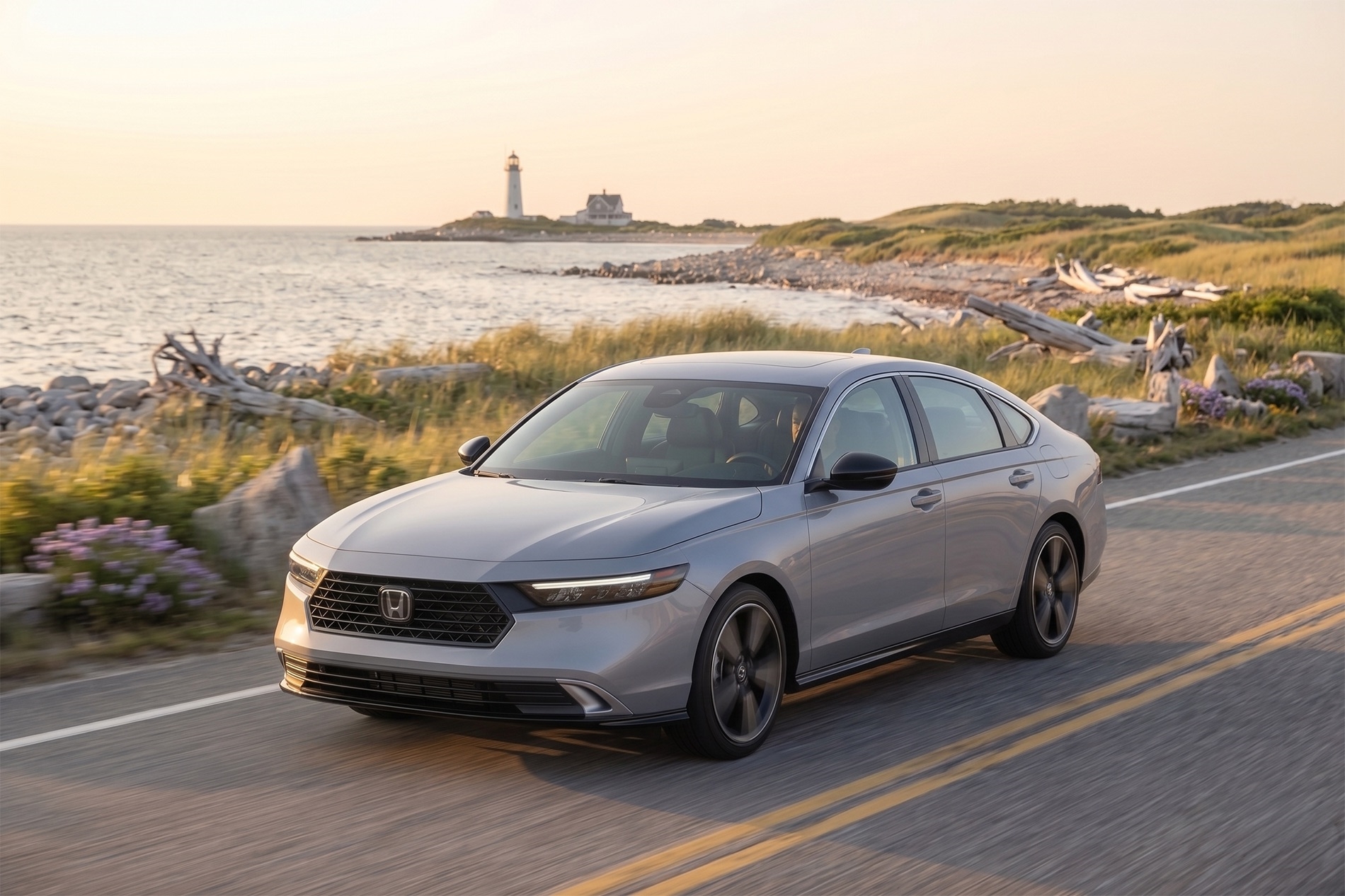
Choosing the Right Honda MPG for How You Actually Drive
Looking across the full Honda lineup, the MPG story becomes less about finding the single highest number and more about finding the right fit for how a vehicle gets used day to day. The Civic and Accord deliver standout efficiency for drivers who spend a lot of time on the road and want to minimize fuel use across constant driving. Hybrid models take that further by turning stop-and-go conditions into an advantage instead of a drawback. SUVs like the CR-V and HR-V hold strong efficiency while adding the space people need, while larger models like the Pilot, Passport, and Odyssey keep fuel use controlled even as they handle more passengers and cargo. The Ridgeline brings truck capability into that same conversation without pushing fuel demands out of reach, and the Prologue changes the equation entirely by removing gas from the picture.
For drivers across Brockton, Seekonk, Dartmouth, New Bedford, Fall River, Bridgewater, and Taunton, those differences show up quickly in real use. A week rarely follows one pattern, and the way a vehicle handles short trips, traffic, longer drives, and changing plans ultimately decides how efficient it feels over time. That is why comparing Honda MPG is not just about specs—it is about understanding which model aligns with how you actually drive.
The right choice is the one that keeps fuel use predictable while still matching everything else you expect from your vehicle. When those two things line up, the numbers on paper start to make sense in real life.
FAQ: Honda MPG Comparison & Fuel Efficiency
Which Honda gets the best gas mileage?
The Honda Civic Hybrid and Accord Hybrid deliver the highest MPG in the lineup, reaching into the high 40s to around 50 MPG combined. These models are built for drivers who spend a lot of time on the road and want to keep fuel use as low as possible without giving up comfort.
Are Honda hybrids worth it for fuel savings?
Honda hybrids make the biggest impact in stop-and-go driving and frequent short trips. They reduce fuel use during everyday driving patterns where gas engines typically use more fuel, which helps keep weekly fuel costs more predictable.
What is the most fuel-efficient Honda SUV?
The CR-V Hybrid stands out as the most fuel-efficient Honda SUV, reaching around 40 MPG combined. It offers a strong balance of interior space and fuel efficiency, making it a practical choice for drivers who want SUV versatility without a big jump in fuel use.
Do larger Honda SUVs use a lot more gas?
Larger SUVs like the Pilot and Passport use more fuel than smaller models, but they stay within a controlled range for their size. They are designed to carry more passengers and cargo while keeping fuel use manageable for everyday driving.
Is the Honda Ridgeline good on gas for a truck?
The Honda Ridgeline delivers strong MPG for a midsize truck, staying around the low 20s combined. It gives drivers truck capability while keeping fuel use closer to an SUV than a full-size pickup.
How does city vs highway driving affect Honda MPG?
City driving usually lowers MPG due to stops and restarts, while highway driving tends to be more efficient with steady speeds. Hybrid models help reduce that gap by staying efficient in both conditions.
Does AWD lower MPG on Honda vehicles?
All-wheel drive can slightly reduce MPG compared to 2WD models because it adds weight and drivetrain complexity. The difference is usually small and often worth it for drivers who want added traction and confidence.
How much does MPG really impact fuel costs?
MPG directly affects how often you need to refuel and how much you spend over time. Higher MPG vehicles reduce the number of fill-ups and make fuel costs more consistent, especially for drivers who are on the road often.
Is the Honda Prologue cheaper to run than gas models?
The Honda Prologue uses electricity instead of gas, which changes the cost structure completely. Charging typically costs less than fueling, and the vehicle avoids traditional fuel expenses altogether.
Where can I compare Honda MPG and find the right model for my driving needs?
At Silko Honda, we help drivers from Brockton, Seekonk, Dartmouth, New Bedford, Fall River, Bridgewater, and Taunton compare Honda MPG across every model and find the one that fits how they actually drive. Whether you’re navigating daily traffic or heading toward Providence, we’ll help you choose a Honda that keeps fuel use under control while matching your routine.
Why Drivers Choose Silko Honda for MPG-Focused Honda Shopping
At Silko Honda, we don’t approach MPG as a number on a spec sheet—we approach it as part of how a vehicle fits into your week. We work with drivers every day who are trying to balance fuel costs with everything else they need from their vehicle, and that perspective shapes how we guide each conversation.
Instead of pointing you toward one “best” option, we help you compare how different Honda models actually behave in real driving conditions. That means looking at how hybrids perform in stop-and-go patterns, how SUVs hold efficiency while adding space, and how trucks like the Ridgeline fit into daily use without pushing fuel costs too far. The goal is to match you with something that works long after the initial purchase decision.
We’re proud to serve drivers from Brockton, Seekonk, Dartmouth, New Bedford, Fall River, Bridgewater, and Taunton, as well as those heading toward Providence and the surrounding South Coast area. Our focus stays on helping you make a decision that feels right for how you drive, not just what looks good on paper. When you leave with the right Honda, the MPG numbers take care of themselves.
DISCLAIMERS: *EPA-estimated mileage and MPGe ratings. Actual results will vary based on driving conditions, vehicle maintenance, battery age and condition, climate, driving habits, load, and other factors. *MPGe ratings are based on EPA testing methodology and are used to compare energy consumption between electric vehicles and gasoline-powered vehicles. *Hybrid fuel economy ratings are estimates and may vary depending on driving conditions, battery charge levels, terrain, temperature, and driver behavior. *Vehicle specifications, features, powertrains, and fuel economy ratings may vary by trim level, drivetrain configuration, and model year. *Information shown is for comparison purposes only and does not represent a guarantee of real-world performance or efficiency.