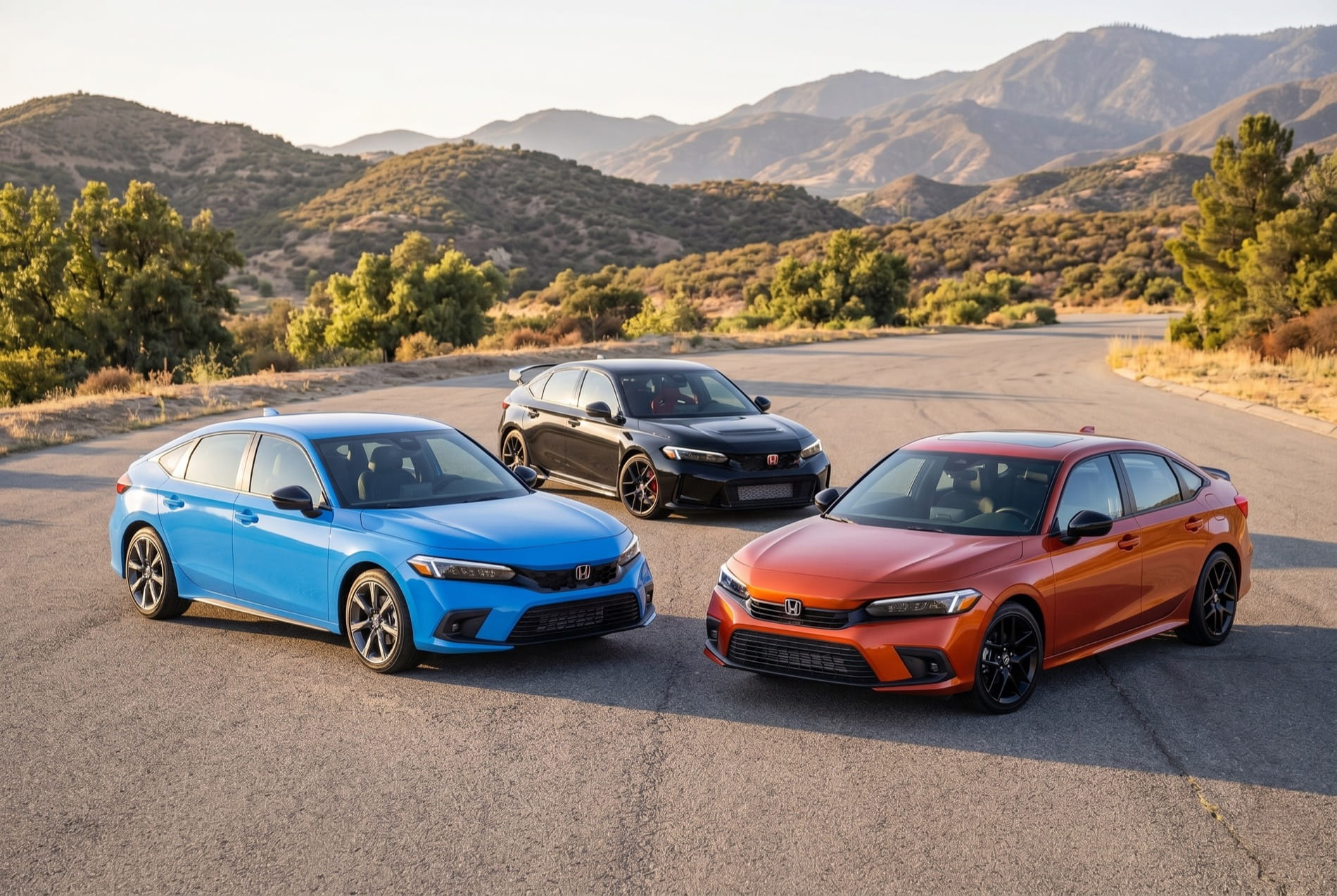
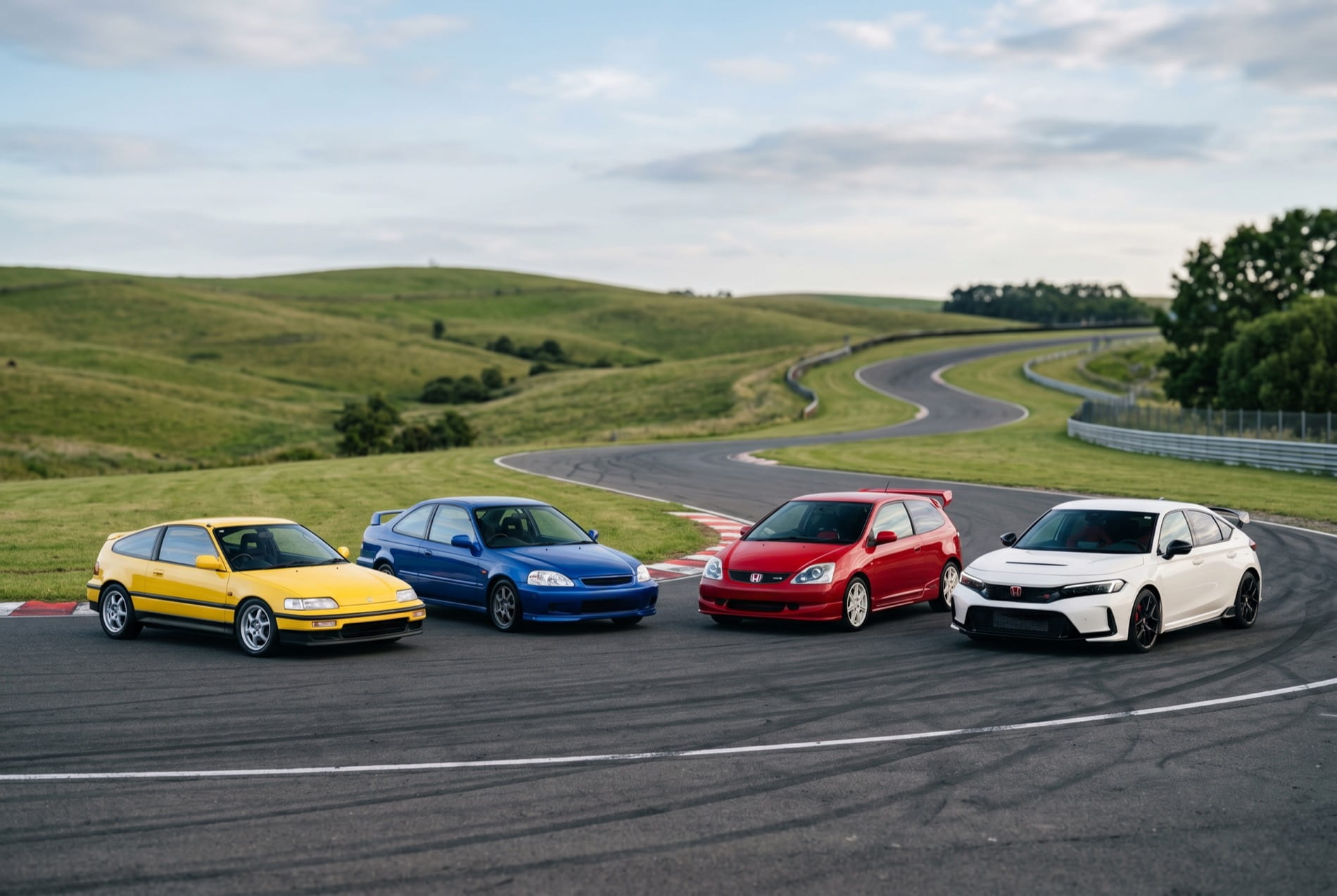
A Clear Guide to Every Honda Civic Generation, Model Year, & Major Turning Point
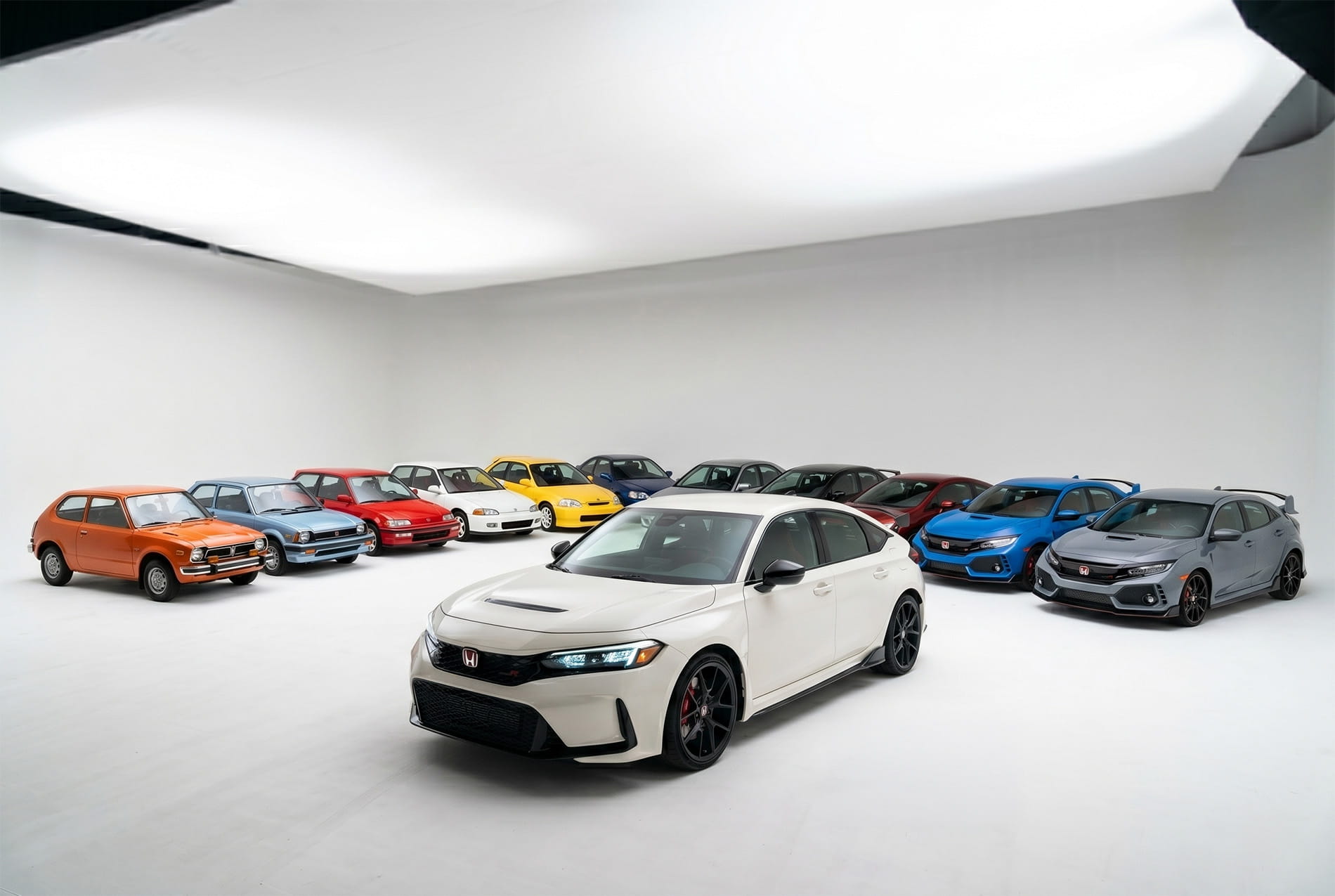
The Honda Civic has been part of the compact-car conversation for more than 50 years, but its story is bigger than fuel economy alone. Across multiple generations, the Civic has moved from a simple small car into a wide-ranging lineup that has included commuter sedans, versatile hatchbacks, fuel-conscious hybrids, enthusiast-focused Si models, and track-capable Type R performance cars.
That long history is also why comparing Honda Civic generations can feel confusing. Some model years are remembered for simplicity and low running costs. Others introduced major changes in safety, interior space, technology, performance, or hybrid power. A few generations stand out because they helped redefine what a compact car could be for drivers who wanted sensible ownership with a little personality built in.
This guide is built to make the Civic timeline easier to understand. Instead of only listing Honda Civic model years, we’ll explain what changed with each generation, why those changes were important, and how the Civic’s role evolved over time. For drivers around Raynham, Brockton, Taunton, the South Shore, and the South Coast, that context is helpful whether you’re comparing older Civic models, researching the first year of the Honda Civic, or deciding how today’s Civic fits into the nameplate’s larger story.
A Quick Snapshot of Civic Generations ▼
Use this section as a fast orientation before the full generation-by-generation timeline below.
| Honda Civic Generations at a Glance |
| First Civic Model Year |
1973 in the United States, after the Civic launched globally in 1972 |
| Current Generation |
11th generation, beginning with the 2022 model year |
| Main Historical Pattern |
The Civic grew from a small efficiency-focused car into a broader compact lineup with sedan, hatchback, hybrid, Si, and Type R identities. |
| Lasting Importance |
Few compact cars have balanced fuel economy, practical ownership, reliability, driver involvement, and performance credibility across as many eras. |
| Enthusiast Highlights |
The fourth, fifth, sixth, eighth, tenth, and eleventh generations are especially well known for their connection to Civic Si, hatchback, lightweight-chassis, high-revving-engine, manual-transmission, and Type R history. |
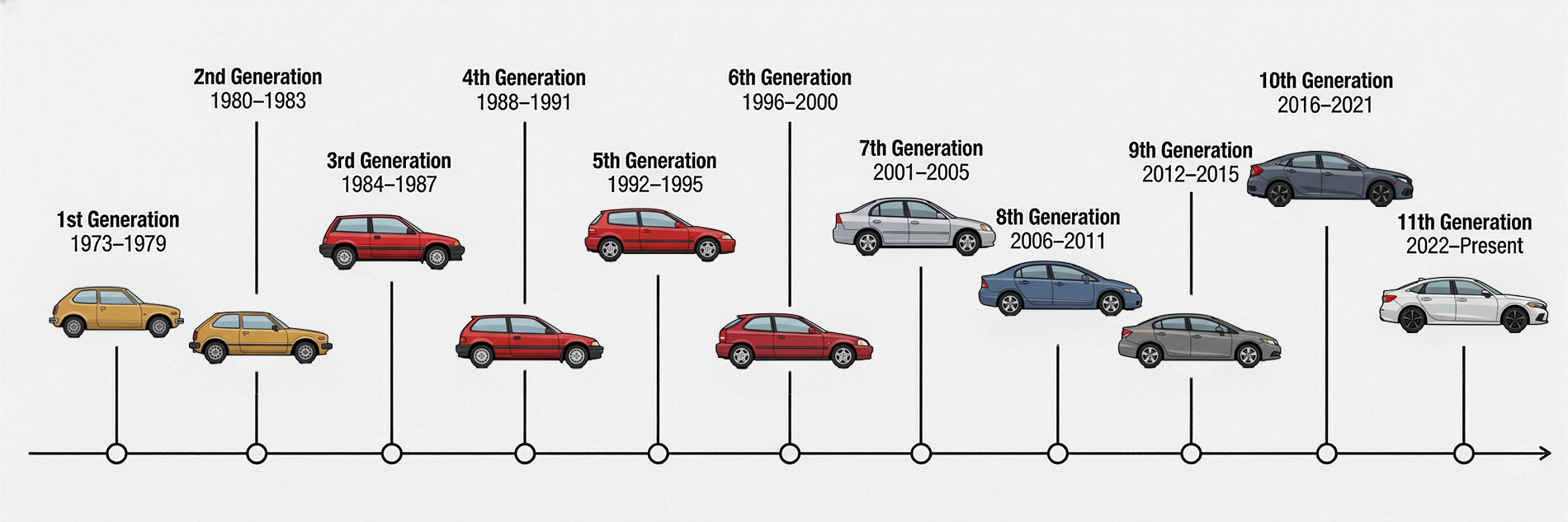
Honda Civic Generations by Year
Before looking at each generation in detail, it helps to see the Civic timeline in one place. The Honda Civic has changed size, shape, purpose, and personality over the years, but the model’s core appeal has stayed surprisingly consistent: sensible dimensions, economical operation, long-term dependability, and a driving feel that often gives the Civic more character than a typical compact car.
The generation years below are organized around the U.S. Civic timeline, which is the most useful reference point for shoppers comparing Honda Civic model years in Massachusetts and across the United States.
| Honda Civic Generation Years & Major Themes |
| General U.S. Model-Year Timeline — Some Global Markets, Body Styles, or Specialty Models May Vary. |
| Generation |
U.S. Model Years |
General Era |
Historical Importance |
| 1st Generation |
1973–1979 |
Original Civic |
Established the Civic as a small, economical Honda at a time when fuel economy was becoming a major ownership priority. |
| 2nd Generation |
1980–1983 |
More Mature Civic |
Gave the Civic a larger, more refined feel while keeping its efficiency-first personality intact. |
| 3rd Generation |
1984–1987 |
Body-Style Expansion |
Expanded the Civic family with more distinct body styles and gave the nameplate a wider personality through the 1980s. |
| 4th Generation |
1988–1991 |
Engineering & Handling Era |
Became known for light weight, clean proportions, and chassis tuning that helped establish the Civic as more than basic transportation. |
| 5th Generation |
1992–1995 |
Rounded 1990s Civic |
Blended efficiency, reliability, and a more modern design that later became closely tied to 1990s Honda culture. |
| 6th Generation |
1996–2000 |
Mainstream Popularity Peak |
Strengthened the Civic’s reputation as a practical, affordable, durable compact while giving the Si nameplate more visibility. |
| 7th Generation |
2001–2005 |
Cabin-Space Era |
Shifted emphasis toward interior room, daily comfort, and simplified ownership for commuting and small-family use. |
| 8th Generation |
2006–2011 |
Futuristic Redesign |
Gave the Civic a more dramatic design direction and reinforced the Si as a serious factory performance compact. |
| 9th Generation |
2012–2015 |
Transitional Civic |
Focused on refinement, safety, and feature updates that helped move the Civic toward a more polished modern compact role. |
| 10th Generation |
2016–2021 |
Turbocharged Global Civic |
Marked a major redesign with a more global platform, available turbocharged power, hatchback return, and the U.S. arrival of Civic Type R. |
| 11th Generation |
2022–Present |
Mature Modern Civic |
Refined the Civic’s design, technology, safety, and fuel-economy mission while bringing hybrid power back into the modern lineup. |
The table shows how the Civic moved from a fuel-conscious small car into a much wider compact lineup. Early generations established the Civic’s economical, space-smart foundation. Later generations added more comfort, safety, technology, hybrid availability, hatchback flexibility, and stronger factory performance credibility through models like the Civic Si and Civic Type R.
What Changed With
Every Generation of Honda Civic Model by Year
Each Honda Civic generation reflects a different moment in compact-car history. Some generations are remembered for their simplicity. Others stand out because of safety improvements, fuel-economy gains, styling changes, new body styles, or performance models. The sections below break down every Civic generation with the model years, major themes, and lasting importance of each era.
1st Generation Honda Civic 1973–1979 ▼
| 1st Generation Honda Civic Overview |
| Highlighted Historical Details Only — Not a Complete List of All Features, Body Styles, Engines, or Market Variations. |
| U.S. Model Years |
1973–1979 |
| Original Role |
Small, efficient, practical Honda designed for everyday transportation |
| Body-Style Identity |
Best remembered as a compact hatchback, with additional body-style variations appearing during the generation |
| Key Historical Theme |
Fuel efficiency, space-smart packaging, and Honda’s early small-car credibility in the U.S. market |
| Historical Importance |
The original Civic helped establish Honda as a serious small-car brand by offering a practical alternative during an era when fuel economy and reliability were becoming major ownership priorities. |
How the First-Generation Civic Set the Foundation
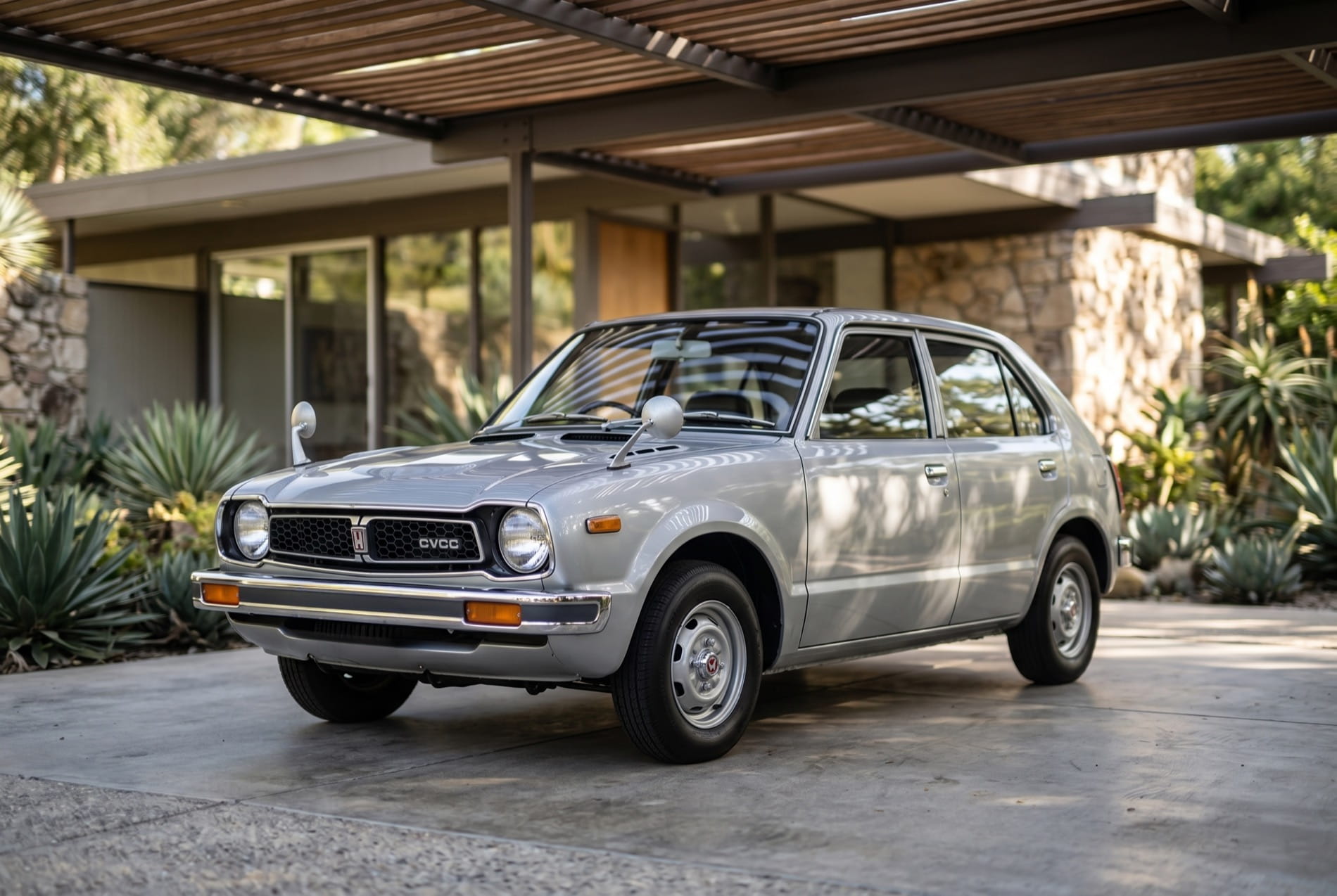
The first-generation Honda Civic arrived at the right moment. As fuel economy became more important in the 1970s, the Civic gave drivers a small car that felt purposeful rather than disposable. Its compact footprint made it easy to park and maneuver, while its hatchback layout gave it more day-to-day flexibility than its size suggested.
This generation also helped define the Civic’s long-term identity. It was not built around flash or excess. It was built around smart packaging, low operating costs, and practical ownership. Those qualities became the foundation for later Civic generations, even as the car grew larger, safer, quicker, and more refined.
For Honda, the Civic became more than a new model. It became proof that a small car could earn trust by being efficient, thoughtfully engineered, and easy to live with. That formula still explains much of the Civic’s appeal today.
2nd Generation Honda Civic 1980–1983 ▼
| 2nd Generation Honda Civic Overview |
| Highlighted Historical Details Only — Not a Complete List of All Features, Body Styles, Engines, or Market Variations. |
| U.S. Model Years |
1980–1983 |
| Original Role |
A more mature follow-up to the original Civic |
| Body-Style Identity |
Hatchback, sedan, and wagon-style practicality helped the Civic appeal to more types of small-car buyers |
| Key Historical Theme |
More space, more refinement, and a stronger ownership case while keeping the Civic’s efficiency-first identity intact |
| Historical Importance |
The second-generation Civic showed that Honda could grow the Civic’s usefulness while keeping it approachable, efficient, and easy to own. |
How the Second-Generation Civic Grew Up
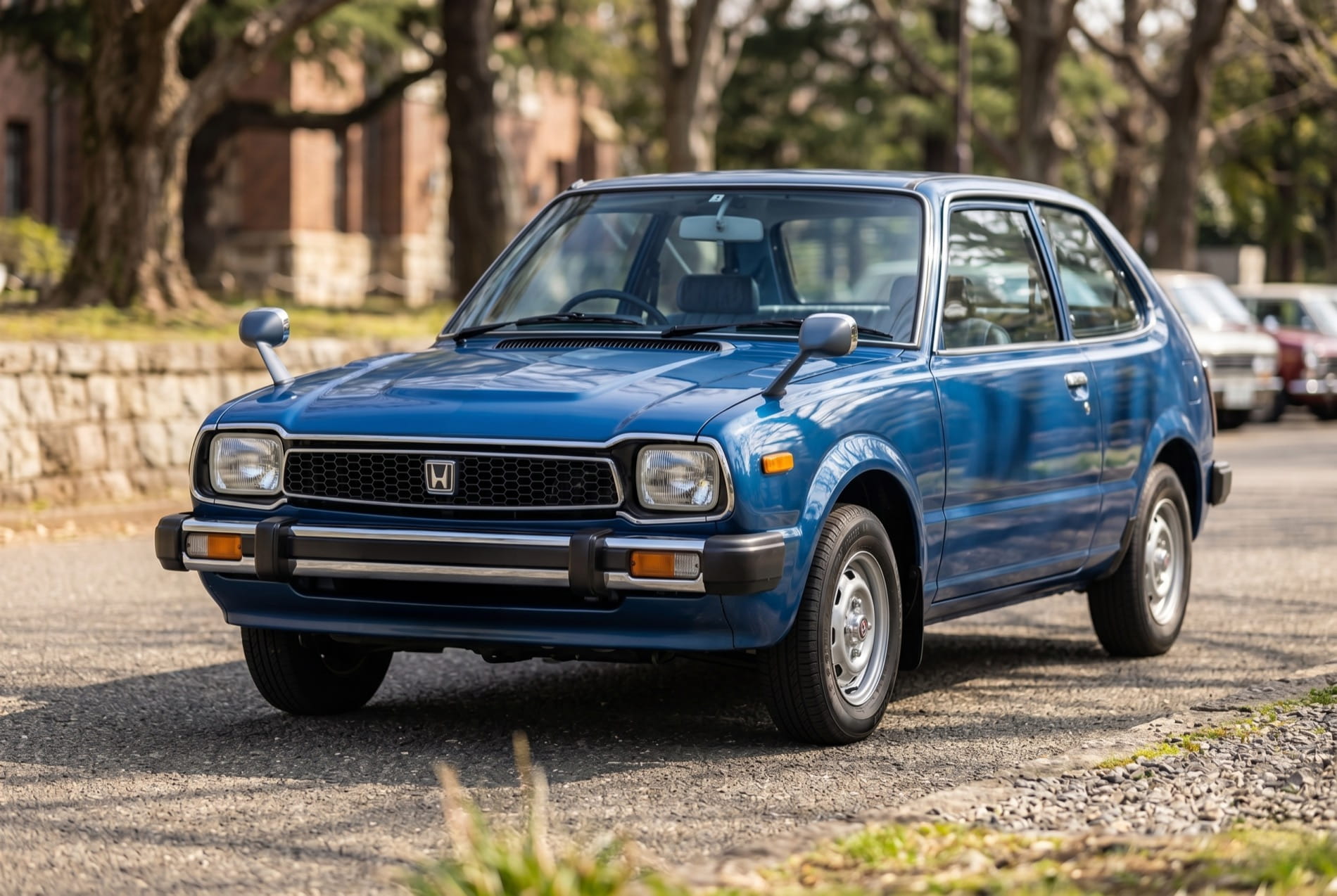
The second-generation Civic built on the original car’s success by giving the nameplate a more grown-up feel. It remained compact and efficient, but the larger footprint and expanded body-style choices helped the Civic work for more than one kind of driver.
That mattered because the Civic was beginning to shift from a clever small car into a more complete compact-car family. A driver who wanted simple commuting, a small household runabout, or a more useful hatchback or wagon-style layout could all find a Civic that fit the job.
This generation also made the Civic feel less like a single answer to fuel prices and more like a lasting part of Honda’s lineup. It kept the practical formula intact while giving the model enough maturity to remain relevant into the 1980s.
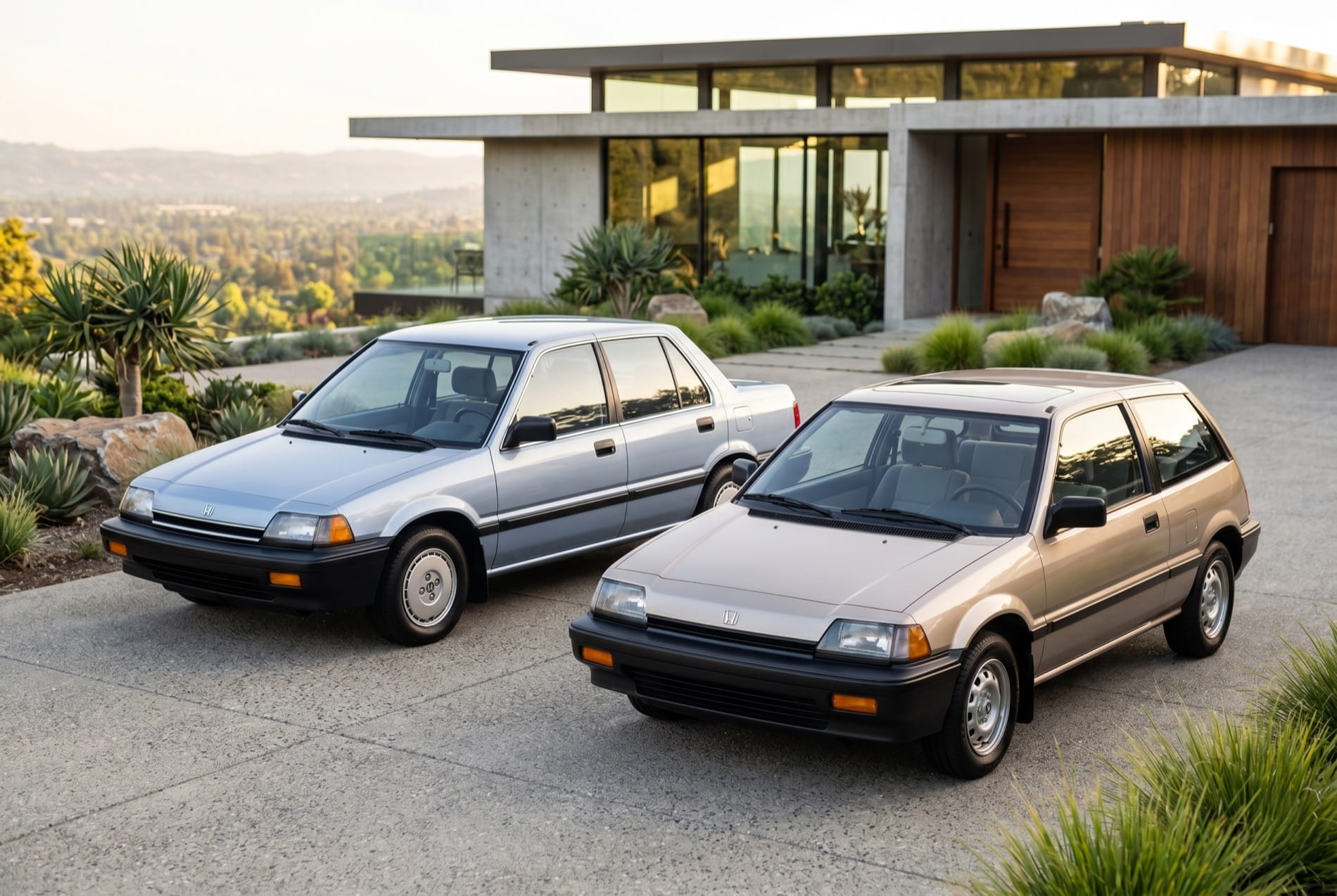
3rd Generation Honda Civic 1984–1987 ▼
| 3rd Generation Honda Civic Overview |
| Highlighted Historical Details Only — Not a Complete List of All Features, Body Styles, Engines, or Market Variations. |
| U.S. Model Years |
1984–1987 |
| Original Role |
A more modern, more varied Civic family with stronger visual separation between body styles |
| Body-Style Identity |
Hatchback, sedan, wagon-style models, and the Civic CRX helped give this generation a wider personality range |
| Key Historical Theme |
Sharper 1980s styling, wider Civic personality, and growing enthusiast interest |
| Historical Importance |
The third-generation Civic helped prove the Civic could support practical commuters, efficient hatchback buyers, and drivers who wanted something lighter, sportier, and more distinctive. |
How the Third-Generation Civic Expanded the Lineup
The third-generation Civic is where the model’s personality started to stretch. Honda still kept the Civic practical and efficient, but the lineup became more visually and functionally diverse. The Civic CRX, in particular, gave the Civic family a stronger enthusiast connection and helped show that efficiency and driver engagement did not have to be separate ideas.
This was important because the Civic was no longer only competing as a sensible economy car. It was becoming a platform with different identities: commuter-friendly, family-useful, cargo-flexible, and genuinely fun in the right configuration.
That wider personality helped set the stage for later Civic generations. The Si and CRX side of the story gave Honda room to build a performance reputation, while the mainstream Civic models continued to serve drivers who simply wanted dependable, efficient transportation.
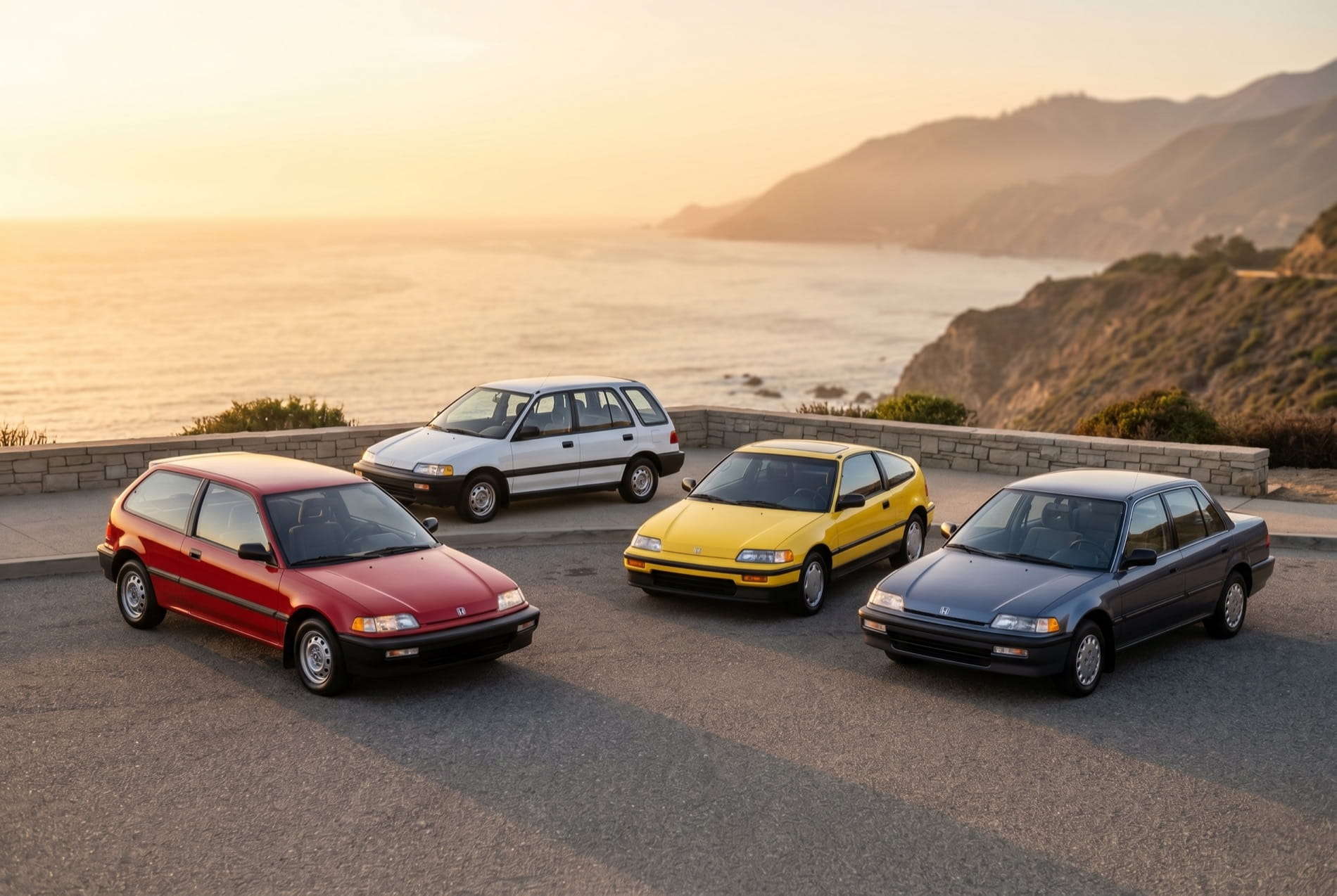
4th Generation Honda Civic 1988–1991 ▼
| 4th Generation Honda Civic Overview |
| Highlighted Historical Details Only — Not a Complete List of All Features, Body Styles, Engines, or Market Variations. |
| U.S. Model Years |
1988–1991 |
| Original Role |
A more refined, better-handling Civic that kept the model light, efficient, and easy to live with |
| Body-Style Identity |
Hatchback, sedan, wagon-style models, and CRX variants continued the Civic’s practical and enthusiast-friendly range |
| Key Historical Theme |
Engineering polish, light weight, responsive handling, and growing enthusiast credibility |
| Historical Importance |
The fourth-generation Civic helped connect Honda’s practical small-car reputation with a stronger sense of road feel and mechanical precision. |
How the Fourth-Generation Civic Sharpened the Formula
The fourth-generation Civic sharpened the model’s road feel while keeping its basic mission intact. It was still small, economical, and easy to live with, but its lighter feel and more composed chassis helped separate it from many economy cars of the period.
This is why the fourth generation still matters in Civic history. It strengthened the idea that a compact car could be affordable and efficient without feeling numb. The Civic’s light weight, simple proportions, and approachable engineering gave it a character that later generations would continue to build on.
For everyday owners, this generation was still about easy transportation and low running costs. For enthusiasts, it helped establish the Civic as a car worth paying attention to for more than basic commuting.
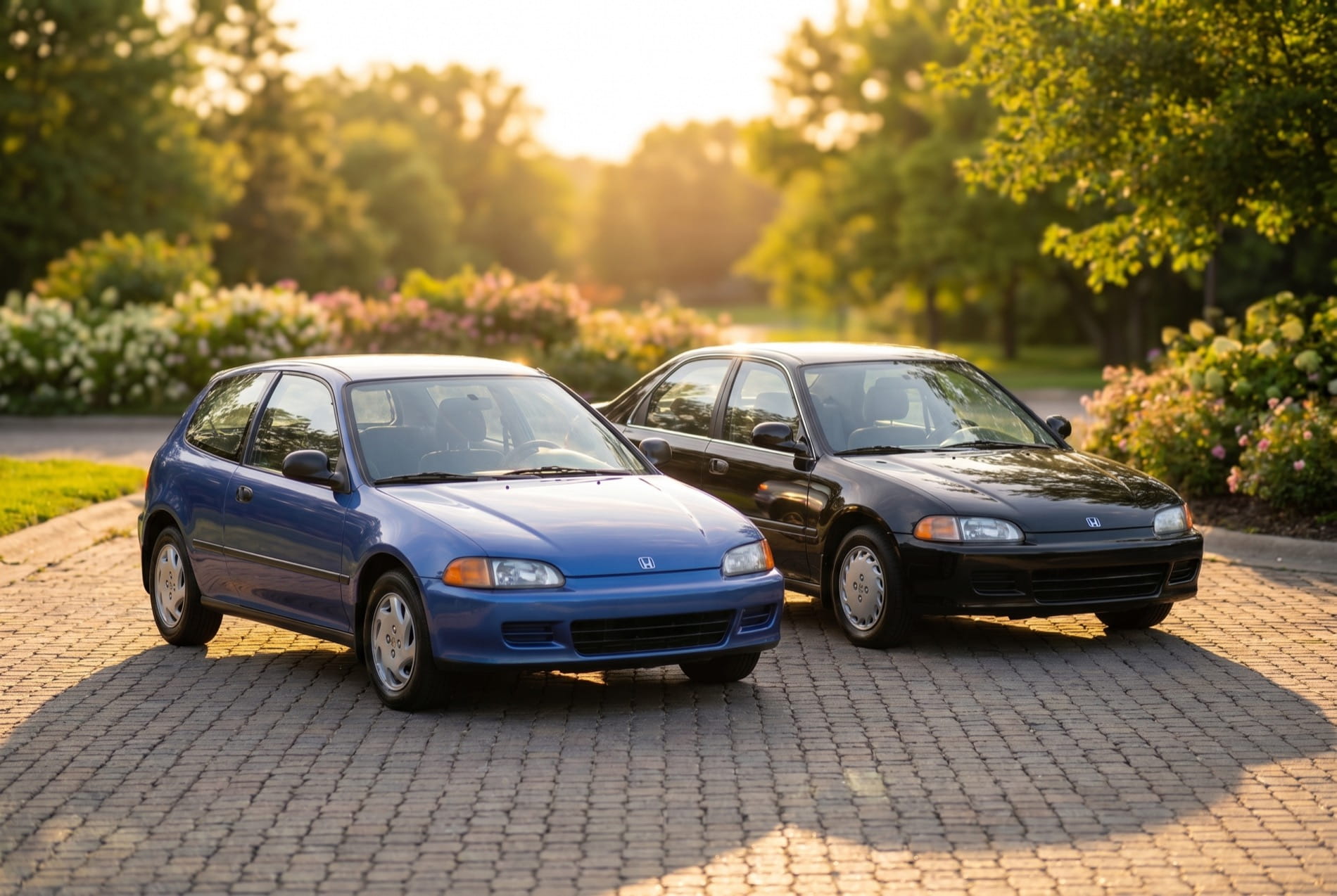
5th Generation Honda Civic 1992–1995 ▼
| 5th Generation Honda Civic Overview |
| Highlighted Historical Details Only — Not a Complete List of All Features, Body Styles, Engines, or Market Variations. |
| U.S. Model Years |
1992–1995 |
| Original Role |
A smoother, more modern Civic that carried Honda’s compact-car formula deeper into the 1990s |
| Body-Style Identity |
Sedan, coupe, and hatchback versions helped the Civic serve commuters, small households, and style-conscious compact buyers |
| Key Historical Theme |
Rounded design, strong efficiency, durable ownership reputation, and deeper connection to 1990s Honda culture |
| Historical Importance |
The fifth-generation Civic became one of the defining compact Hondas of the 1990s by blending low running costs with a cleaner, more modern identity. |
How the Fifth-Generation Civic Defined a 1990s Era
The fifth-generation Civic gave the model a softer, more modern shape while keeping the small-car efficiency and mechanical simplicity that drivers already associated with Honda. It felt less upright than earlier Civics and more in step with the 1990s compact-car market.
This generation also became important culturally. For many drivers, it represented the Civic as an affordable, reliable first car. For enthusiasts, it became a familiar platform because of its light weight, clean design, and connection to Honda’s broader performance reputation of the era.
Its lasting value is that it made the Civic feel modern while preserving the qualities that made people trust it. That balance helped the Civic appeal to first-time buyers, commuters, and drivers who wanted a compact car with more personality than the category usually promised.
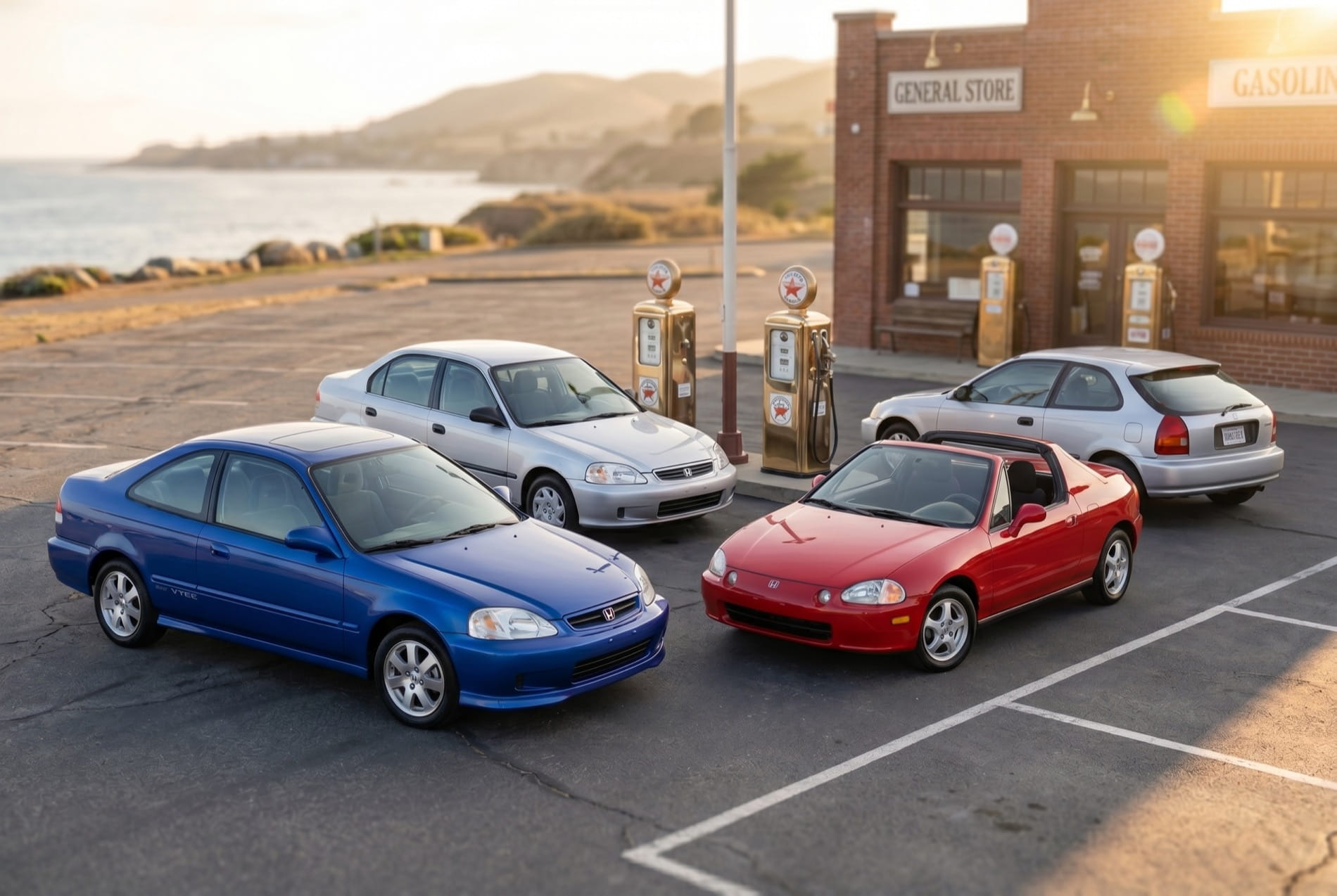
6th Generation Honda Civic 1996–2000 ▼
| 6th Generation Honda Civic Overview |
| Highlighted Historical Details Only — Not a Complete List of All Features, Body Styles, Engines, or Market Variations. |
| U.S. Model Years |
1996–2000 |
| Original Role |
A highly popular compact car that balanced daily usability, efficiency, reliability, and a growing performance image |
| Body-Style Identity |
Sedan, coupe, and hatchback availability kept the Civic flexible for different ownership needs, while the Civic del Sol added a unique two-seat, targa-style variant connected to this era of Civic history. |
| Key Historical Theme |
Mainstream compact strength, long-term ownership appeal, and renewed Civic Si attention late in the generation |
| Historical Importance |
The sixth-generation Civic became one of the most recognizable Civic eras because it combined approachable ownership with strong enthusiast and used-car-market relevance. |
How the Sixth-Generation Civic Strengthened Its Reputation
The sixth-generation Civic arrived when Honda’s compact-car reputation was already well established, and it helped reinforce that trust. It was efficient, easy to drive, relatively simple to maintain, and available in body styles that made sense for different types of owners.
This generation also matters because it gave the Civic Si more visibility in the U.S. market. The late-1990s Civic Si helped strengthen the connection between the Civic name and accessible performance, giving Honda shoppers a factory-built option that felt sharper and more enthusiast-focused than the regular commuter models.
For many drivers, the sixth-generation Civic became the image of a dependable compact car. For others, it became a gateway into Honda performance culture. That dual identity is a major reason this generation still carries weight in Civic history.
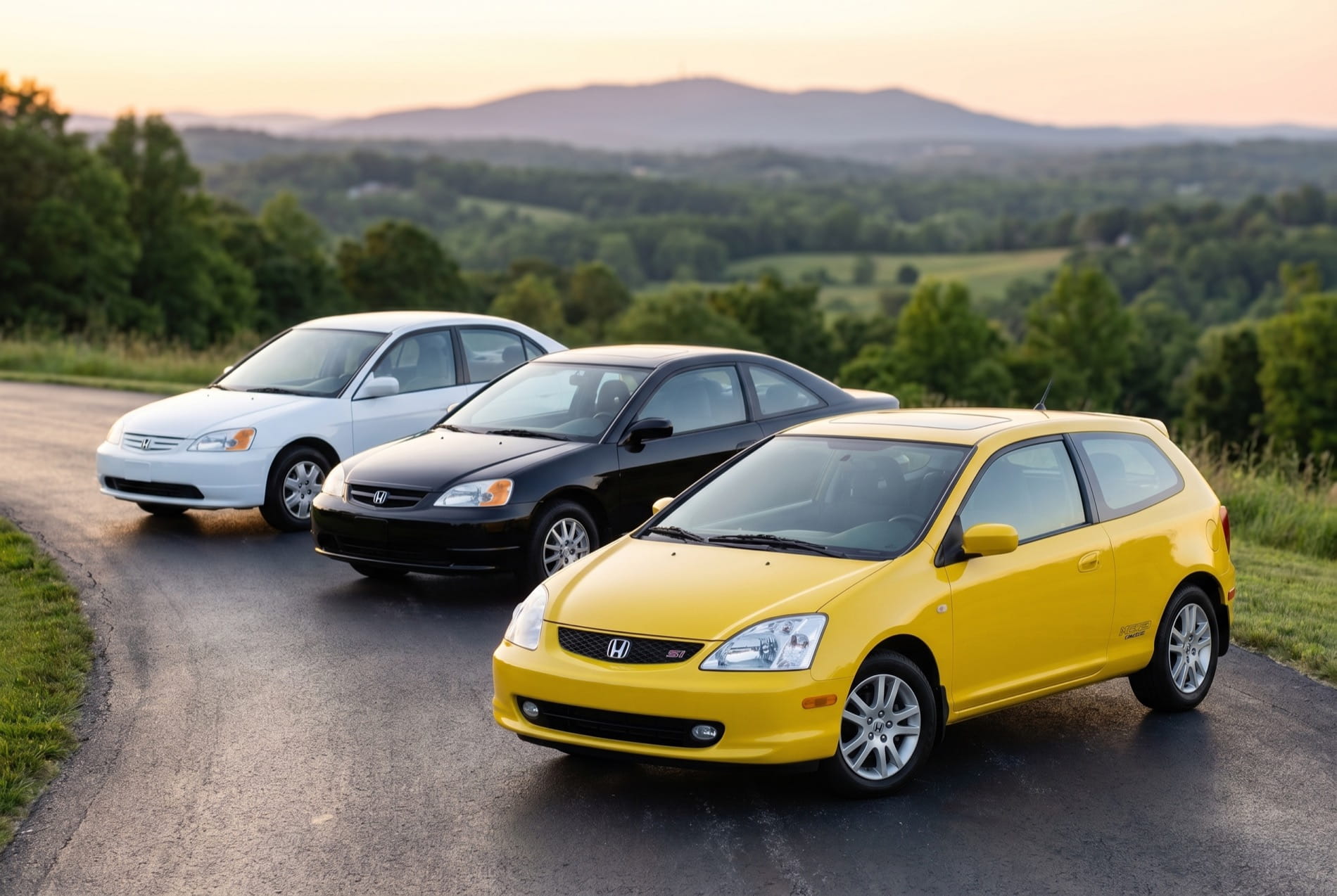
7th Generation Honda Civic 2001–2005 ▼
| 7th Generation Honda Civic Overview |
| Highlighted Historical Details Only — Not a Complete List of All Features, Body Styles, Engines, or Market Variations. |
| U.S. Model Years |
2001–2005 |
| Original Role |
A more spacious and comfort-focused Civic built around practical daily use |
| Body-Style Identity |
Sedan and coupe models carried the mainstream Civic lineup, while the Si used a hatchback-style body in this era |
| Key Historical Theme |
Interior space, simplified ownership, improved daily comfort, and early Civic Hybrid relevance |
| Historical Importance |
The seventh-generation Civic shifted more attention toward cabin usefulness and commuter comfort, making the Civic feel more mature for everyday ownership. |
How the Seventh-Generation Civic Prioritized Daily Comfort
The seventh-generation Civic changed the model’s priorities. Earlier generations had built much of their personality around lightness, low running costs, and a simple mechanical feel. This generation still kept the Civic practical and efficient, but it put more emphasis on interior space, comfort, and daily usability.
That shift made sense for the early 2000s compact-car market. Drivers were expecting small cars to feel less basic, and the Civic answered by becoming easier to live with in routine commuting, school travel, errands, and longer regional drives. It was not the most enthusiast-centered Civic era, but it strengthened the model’s case as a dependable everyday car.
This generation also widened the Civic’s fuel-economy reach. The Civic Hybrid gave Honda a compact sedan for shoppers who wanted lower fuel use, adding another branch to the Civic family before hybrid models became more common across the market.
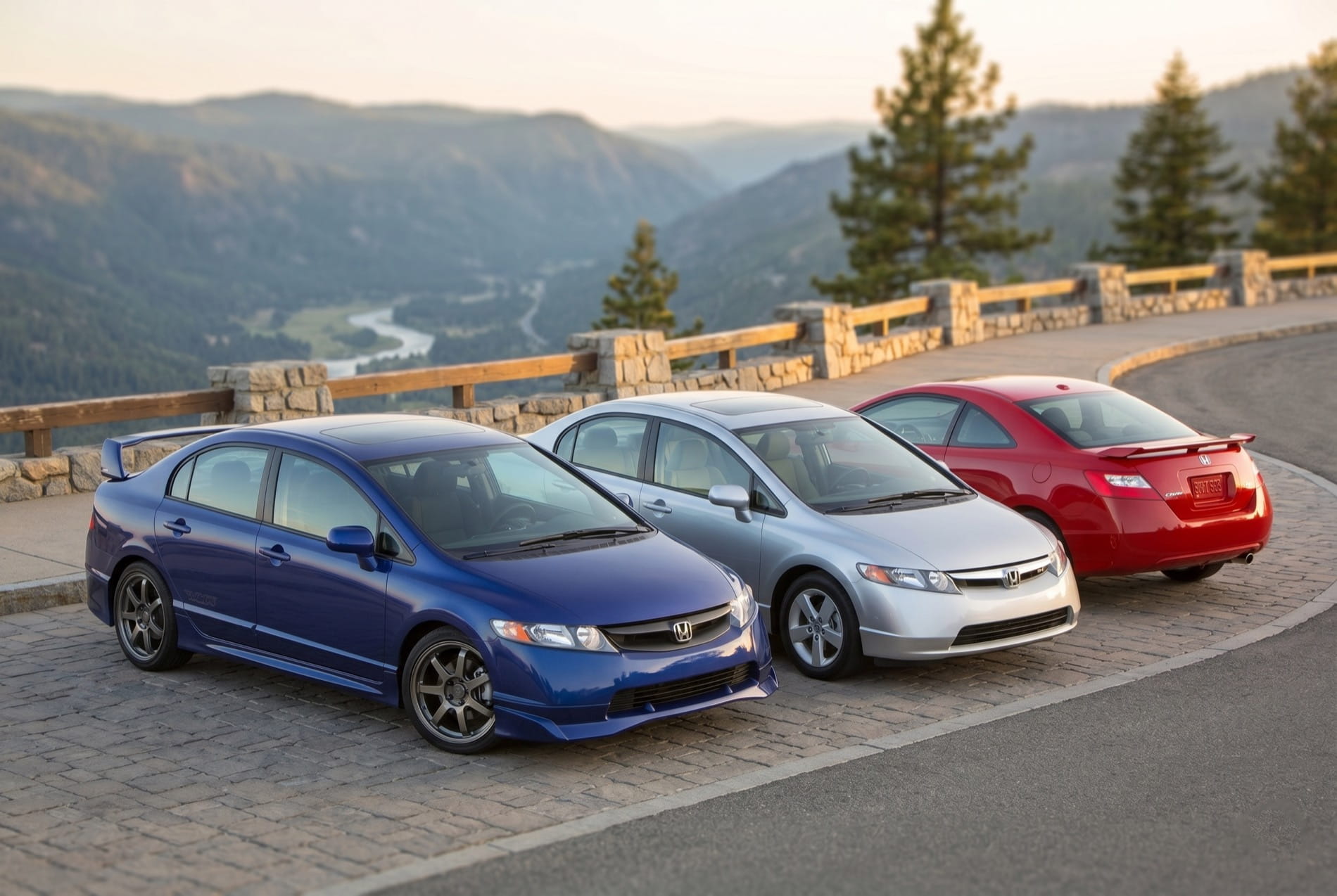
8th Generation Honda Civic 2006–2011 ▼
| 8th Generation Honda Civic Overview |
| Highlighted Historical Details Only — Not a Complete List of All Features, Body Styles, Engines, or Market Variations. |
| U.S. Model Years |
2006–2011 |
| Original Role |
A more dramatic Civic redesign with stronger separation between mainstream comfort and Si performance |
| Body-Style Identity |
Sedan and coupe models, with distinctive design language and a well-remembered Civic Si coupe and sedan lineup |
| Key Historical Theme |
Futuristic styling, two-tier interior design, Civic Hybrid continuity, and stronger Si credibility |
| Historical Importance |
The eighth-generation Civic gave the model a sharper visual identity and helped the Civic Si feel like a more serious factory performance compact. |
How the Eighth-Generation Civic Changed the Visual Direction
The eighth-generation Civic gave the nameplate one of its clearest visual breaks. Its cab-forward shape, two-tier dashboard, and more futuristic cabin made it feel noticeably different from the Civic that came before it.
It also gave the Civic lineup a stronger split personality. Mainstream sedan and coupe models stayed focused on efficient commuting and daily ownership, while the Civic Si gained a more serious performance reputation. The Si models of this era gave enthusiasts a high-revving, factory-backed Civic with a stronger sense of purpose.
This generation showed how wide the Civic’s reach had become. It could be a commuter sedan, a fuel-saving hybrid, or a genuinely engaging sport compact, all while staying under the same Civic umbrella.
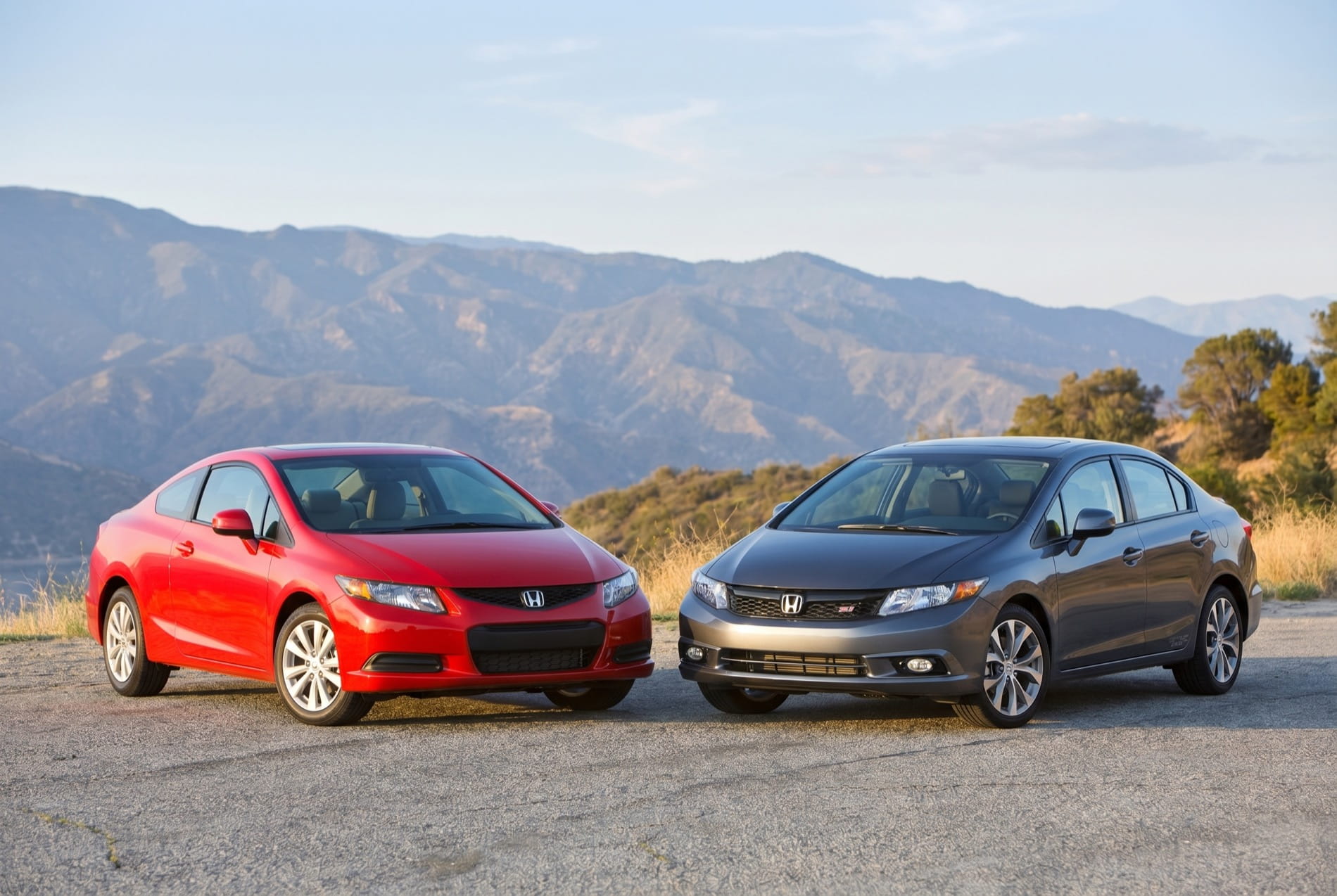
9th Generation Honda Civic 2012–2015 ▼
| 9th Generation Honda Civic Overview |
| Highlighted Historical Details Only — Not a Complete List of All Features, Body Styles, Engines, or Market Variations. |
| U.S. Model Years |
2012–2015 |
| Original Role |
A transitional Civic generation focused on refinement, safety, and updated compact-car expectations |
| Body-Style Identity |
Sedan and coupe models remained central, with Civic Si and Civic Hybrid versions continuing important branches of the lineup |
| Key Historical Theme |
Refinement updates, stronger feature content, improved safety focus, and a bridge toward the more dramatic 10th-generation redesign |
| Historical Importance |
The ninth-generation Civic helped Honda respond to rising compact-car expectations and kept the Civic competitive while preparing for a larger reset. |
How the Ninth-Generation Civic Bridged Two Eras
The ninth-generation Civic is best understood as a transitional chapter. It did not reinvent the Civic as dramatically as the eighth or tenth generations, but it arrived during a period when compact-car buyers were expecting more safety, more technology, and a more refined daily driving experience.
Honda updated this generation quickly, which makes it especially important in Civic history. The changes reflected how competitive the compact segment had become. It was no longer enough for a Civic to be efficient and reliable; shoppers also wanted stronger cabin materials, more standard equipment, better connectivity, and a more polished feel.
This generation kept the Civic’s familiar strengths in place while setting up the major redesign that followed. For used-Civic shoppers, it can still be appealing because it sits between the older, simpler Civic eras and the more modern turbocharged generation that came next.
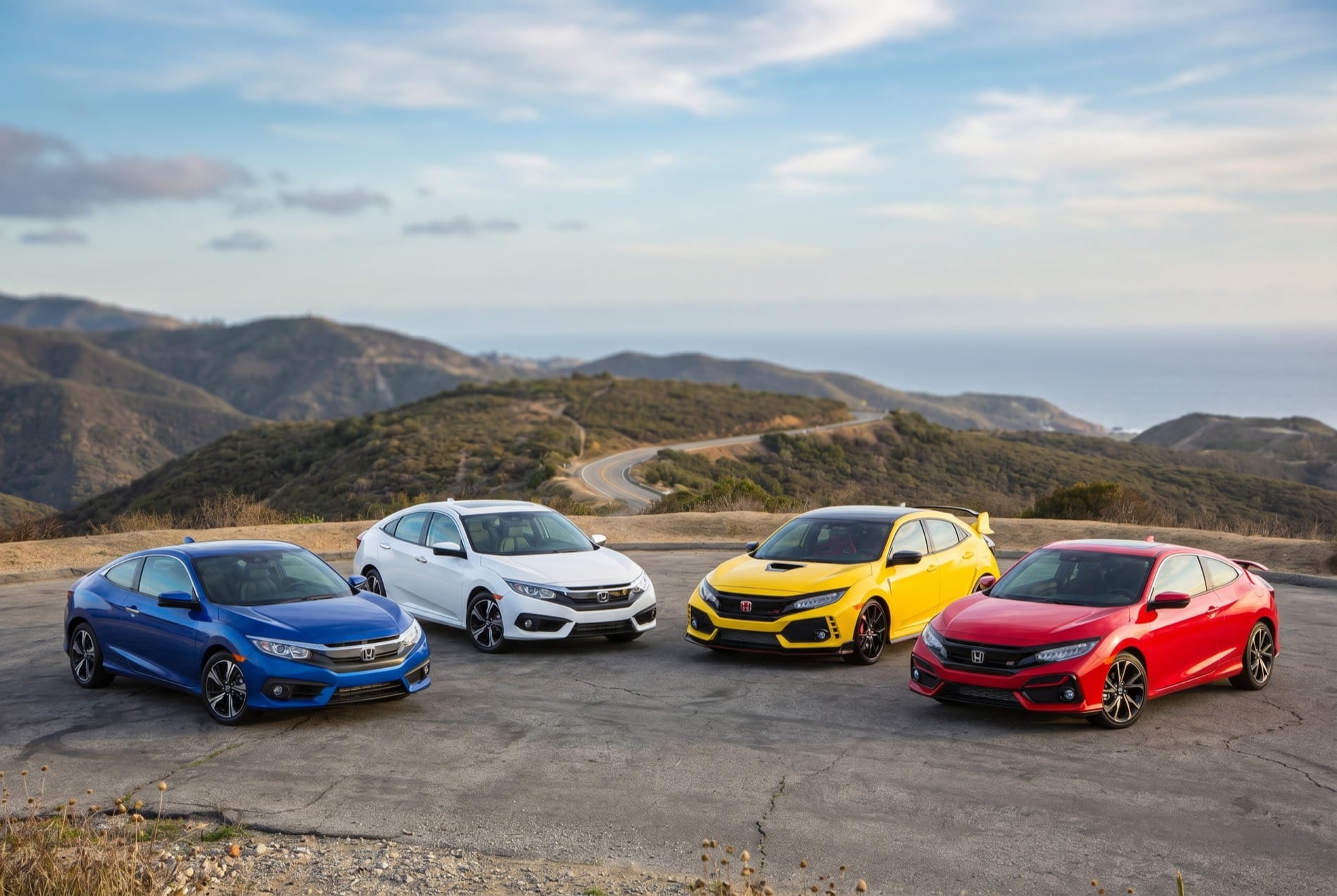
10th Generation Honda Civic 2016–2021 ▼
| 10th Generation Honda Civic Overview |
| Highlighted Historical Details Only — Not a Complete List of All Features, Body Styles, Engines, or Market Variations. |
| U.S. Model Years |
2016–2021 |
| Original Role |
A major Civic reset with a more global platform, bolder styling, wider body-style availability, and a stronger factory performance image |
| Body-Style Identity |
Sedan, coupe, and hatchback models, with Civic Si and Civic Type R expanding the performance side of the lineup |
| Key Historical Theme |
Turbocharged power, hatchback return, sharper handling, modern tech, and the first Civic Type R sold in the U.S. |
| Historical Importance |
The 10th-generation Civic reestablished the model as one of the most complete compact cars of its era by combining everyday practicality with a stronger enthusiast and performance identity. |
How the Tenth-Generation Civic Reset the Modern Lineup
The 10th-generation Civic was one of the most important modern Civic redesigns. After the more transitional ninth generation, this Civic felt like a fuller reset. It brought more expressive styling, a wider stance, a more modern cabin, available turbocharged power, and a hatchback body style that gave the lineup a more versatile, global feel.
This generation also changed how many shoppers viewed the Civic. It was no longer only the safe compact-car answer for efficiency and reliability. It could also feel genuinely sharp, especially in Sport, Si, hatchback, and Type R form. The U.S. arrival of the Civic Type R gave the Civic nameplate a factory performance halo that many American Honda enthusiasts had waited years to see.
For actual ownership, the 10th-generation Civic remains highly relevant because it blends modern technology, strong fuel economy, usable cabin space, and a more engaging driving character than many compact cars from the same period. It is the generation where the Civic’s commuter side and enthusiast side felt more closely connected again.
11th Generation Honda Civic 2022–Present ▼
| 11th Generation Honda Civic Overview |
| Highlighted Historical Details Only — Not a Complete List of All Features, Body Styles, Engines, or Market Variations. |
| U.S. Model Years |
2022–Current |
| Original Role |
A cleaner, more mature modern Civic with stronger technology, safety, refinement, and hybrid relevance |
| Body-Style Identity |
Sedan and hatchback models, with Civic Si, Civic Type R, and the 2025 return of Civic Hybrid power shaping the modern lineup |
| Key Historical Theme |
Simpler design language, improved cabin presentation, advanced safety technology, modern hybrid power, and continued performance depth |
| Historical Importance |
The 11th-generation Civic shows how far the model has matured while keeping the Civic’s traditional mix of efficiency, practicality, and driver engagement intact. |
How the Eleventh-Generation Civic Refines the Modern Formula
The 11th-generation Civic brought the model into a cleaner and more mature design era. Compared with the sharper, more angular 10th generation, this Civic feels more restrained, more refined, and more adult in presentation. That shift matters because it gives the Civic a broader ownership personality without making it feel anonymous.
This generation also restored Civic Hybrid relevance in a major way. With available hybrid power in the modern Civic lineup, Honda reconnected the Civic’s original fuel-economy mission with current expectations for stronger performance, lower fuel use, and a more polished daily driving experience. For drivers who spend time on Route 44, Route 24, or longer South Coast commutes, that combination is especially easy to understand.
At the same time, Honda kept the enthusiast side of the Civic alive through the Si and Type R. That matters because the Civic has always been strongest when it can serve more than one kind of driver. The current generation can be an efficient commuter, a practical hatchback, a refined small sedan, or a serious performance car depending on the version.
View New Honda Civic Inventory View Used Honda Civic Inventory
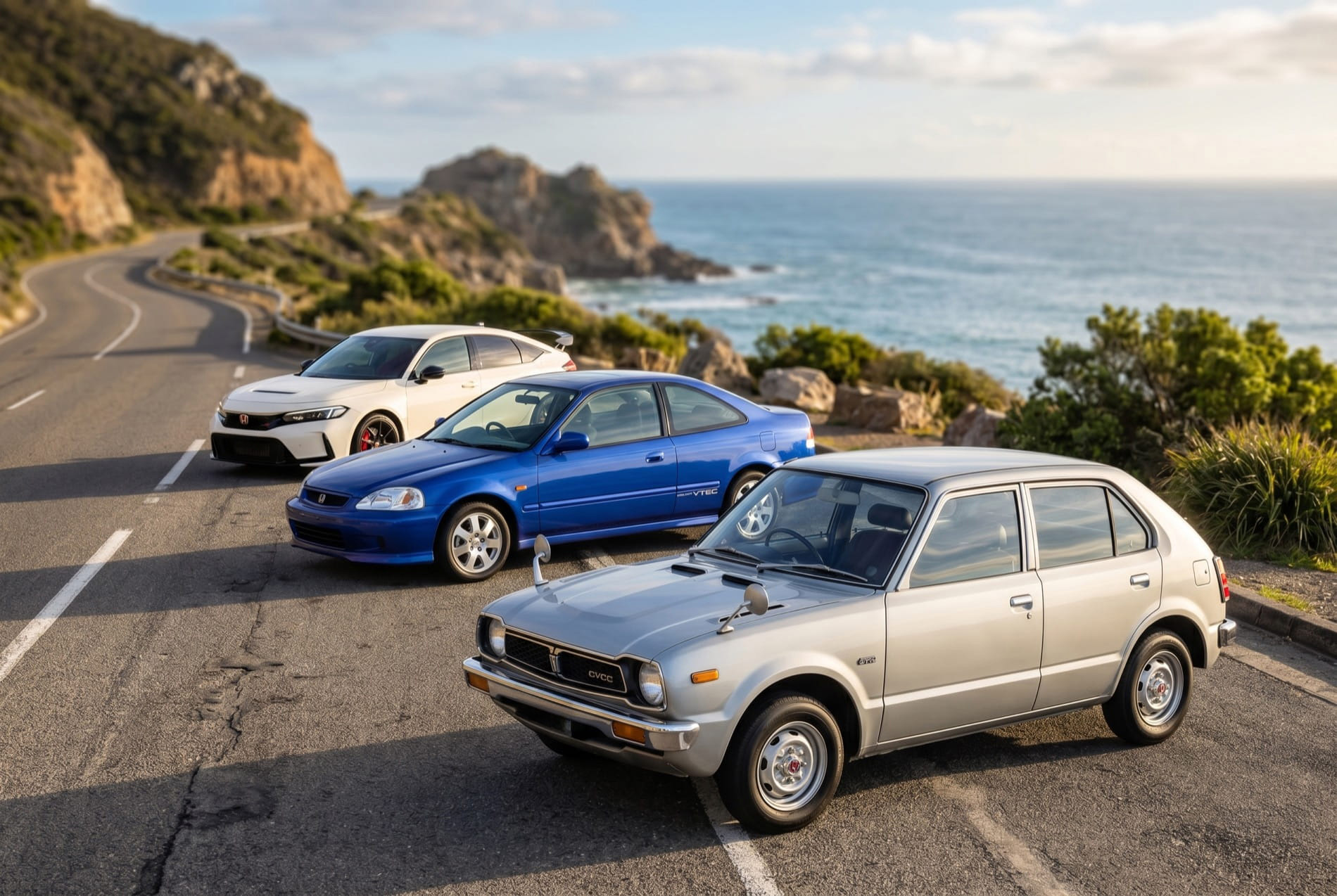
How the Honda Civic Changed Across the Generations
Once the full Civic timeline is laid out, the more useful question becomes how the model changed over time. The Civic did not evolve in one straight line. Some generations focused on fuel economy and small-car packaging. Others emphasized interior space, safety, performance, hybrid efficiency, or a more refined driving experience.
The comparison below groups the Civic’s history into broader eras so shoppers can understand what changed, why it mattered, and how those changes still affect the way people compare Honda Civic model years today.
| Honda Civic Generations Compared by Era |
| Simplified Historical Comparison — Individual Trims, Engines, Body Styles, and Market Availability Vary by Model Year. |
| Civic Era |
Generations / Years |
Main Change |
What It Shows Today |
| Original Efficiency Era |
1st–2nd Generations
1973–1983 |
The Civic established its small-car identity through fuel economy, simple packaging, and practical ownership. |
These early Civics explain the foundation of the nameplate: economical, approachable, space-smart, and easy to live with. |
| Body-Style & Enthusiast Growth |
3rd–4th Generations
1984–1991 |
The Civic lineup became more varied, with stronger hatchback, CRX, wagon-style, and handling-focused appeal. |
This era helped create the Civic’s enthusiast following while keeping the car sensible and economical. |
| 1990s Mainstream Strength |
5th–6th Generations
1992–2000 |
The Civic became one of the defining compact cars of the 1990s, blending reliability, efficiency, affordability, and Si recognition. |
These generations remain culturally important because they shaped how many drivers remember older Honda Civics. |
| Comfort, Space & Technology Shift |
7th–9th Generations
2001–2015 |
Honda pushed the Civic toward more interior room, comfort, safety, hybrid availability, and modern feature expectations. |
This middle-modern period shows the Civic moving beyond basic economy-car duty into a more complete compact-car role. |
| Modern Global Civic Era |
10th–11th Generations
2016–Present |
The Civic gained a more global platform feel, available turbocharged power, hatchback usefulness, U.S. Type R availability, cleaner design, and modern hybrid relevance. |
These are the most relevant generations for many current shoppers because they combine Civic efficiency with modern safety, technology, refinement, and performance options. |
The Main Pattern Across Civic History
The Civic’s history is not a straight move from simple to complicated. It is a series of adjustments around the same core idea: make a compact car that fits daily life, stays economical, and still feels more thoughtfully engineered than the category requires. That is why older Civics, modern Civic Hybrids, versatile hatchbacks, Civic Si models, and Civic Type R models can all belong to the same nameplate without feeling disconnected.
Honda Civic Performance Heritage: Si, Type R & Enthusiast Culture
The Civic’s history is not only about efficiency. One reason the nameplate has stayed so recognizable is that Honda built a performance side into the Civic without disconnecting it from the car’s practical roots. The Civic Si, Civic hatchback, and Civic Type R all helped shape the idea that a compact car could be affordable, livable, and genuinely engaging.
That performance identity developed gradually. Earlier Civics earned attention because they were light, simple, and responsive. Later Si models gave Honda shoppers a more deliberate factory sport-compact choice, while the Civic Type R eventually brought a much more serious performance halo to the U.S. lineup.
| Key Civic Performance Milestones |
| Simplified Civic Performance Timeline — Not a Complete List of Every Si, Type R, Engine, or Market-Specific Variant. |
| Civic Branch |
What It Added |
Historical Role |
| Civic CRX |
A lighter, sportier Civic-related model with strong efficiency and driving personality |
Helped establish the idea that Honda’s small-car engineering could feel fun, not just sensible. |
| Civic Si |
Factory-backed sport tuning, manual-transmission appeal, stronger engines in key generations, and a more driver-focused Civic identity |
Gave Civic buyers a performance version that still worked as a practical compact car. |
| Civic Hatchback |
More cargo flexibility and, in many eras, a stronger connection to the enthusiast side of the Civic lineup |
Kept the Civic useful while giving the model a more flexible and expressive body-style option. |
| Civic Type R |
Track-capable performance, aggressive chassis tuning, and Honda’s highest-performance Civic identity |
Became the Civic’s performance halo and gave U.S. shoppers access to a Type R-badged Honda beginning with the 2017 model year. |
That history helps explain why Civic comparisons can feel broader than many compact-car comparisons. A Civic can be a simple commuter, a fuel-conscious sedan, a practical hatchback, a manual-transmission Si, or a Type R with serious performance credentials. Few compact nameplates have carried all of those identities as consistently.
Honda Civic Hybrid, Efficiency & Modern Relevance
The Civic’s fuel-economy reputation began long before hybrid power arrived, but hybrid models gave Honda a more specific way to extend that mission. Early Civic Hybrid models added a lower-fuel-use branch to the lineup, while the modern Civic Hybrid brings that idea back with stronger performance, smoother drivability, and the comfort and technology expected in a current compact car.
The return of Civic Hybrid power in the modern lineup is important because it connects today’s Civic to the nameplate’s original purpose. The Civic is no longer simply a small economy car, but efficiency still matters for drivers who want lower fuel use, easier commuting, and a compact car that feels substantial enough for daily life.
| Civic Fuel-Economy Timeline Over Time |
| Highlighted Themes Only — Fuel-Economy Ratings, Engine Availability, and Hybrid Availability Vary by Model Year, Trim, and Market. |
| Era |
Efficiency Focus |
Ownership Meaning |
| 1970s Civic |
Small size, low fuel use, and practical packaging |
Helped establish the Civic as a useful answer for drivers watching fuel costs and ownership expenses. |
| 1980s–1990s Civic |
Lightweight construction, efficient engines, and simple daily operation |
Built the Civic’s reputation as a low-stress commuter and first-car favorite. |
| 2000s Civic Hybrid |
Dedicated hybrid versions expanded the Civic’s fuel-conscious identity |
Gave compact-car shoppers another way to prioritize efficiency without leaving the Civic lineup. |
| Modern Civic Hybrid |
Hybrid power returns with stronger performance, refinement, and everyday usability |
Connects the Civic’s original efficiency mission with today’s expectations for comfort, technology, and drivability. |
That modern hybrid chapter is especially relevant around southeastern Massachusetts, where many drivers split time between local errands, Route 44 travel, Route 24 commuting, and longer drives toward Boston, Providence, Cape Cod, or the South Coast. A Civic that can stay economical without feeling bare-bones fits the same basic reason the model became successful in the first place.
The Civic’s long-running fuel-economy focus also shows why the model has been able to age so well. Honda did not have to turn the Civic into something entirely different. The company kept refining the same idea: make a compact car that is practical enough for daily life, efficient enough to make sense long-term, and polished enough that owners do not feel like they are settling.
Honda Civic Awards & Recognition Over the Years
Awards are not the only way to judge a vehicle, but they help show how the Civic has remained relevant across different eras. The Civic has earned recognition for value, engineering, safety, performance, and overall excellence, with recent awards showing that the current generation continues to carry the nameplate forward.
| Selected Honda Civic Awards & Recognition |
| Selected Examples Only — This Is Not a Complete List of Every Civic Award or Recognition. |
| Recognition |
Model / Era |
What It Reinforces |
| 2025 North American Car of the Year |
Honda Civic Hybrid |
Reinforced the Civic Hybrid’s modern importance and Honda’s renewed efficiency-performance balance. |
| 2025 Car and Driver 10Best |
Honda Civic lineup |
Showed that the current Civic remains highly regarded for its blend of livability, value, and driving quality. |
| 2025 Car and Driver Editors’ Choice |
Civic Sedan, Civic Hatchback, Civic Si, and Civic Type R |
Highlighted the depth of the Civic lineup, from mainstream models to performance versions. |
| First Civic Type R Sold in America |
2017 Civic Type R |
Marked a major U.S. performance milestone for the Civic nameplate and brought the Type R badge to American Honda showrooms. |
The common thread in those recognitions is range. The Civic has not depended on one identity. It has won attention as an efficient compact, a practical sedan, a useful hatchback, a hybrid, an Si, and a Type R. That variety is part of why the Civic’s history is deeper than a basic model-year timeline.
For current shoppers, the awards matter most when they support real ownership value. Recognition for the Civic Hybrid, Civic lineup, and Civic performance models reflects the same balance that has defined the car for decades: efficiency, usability, smart engineering, and enough driver involvement to keep the Civic interesting.
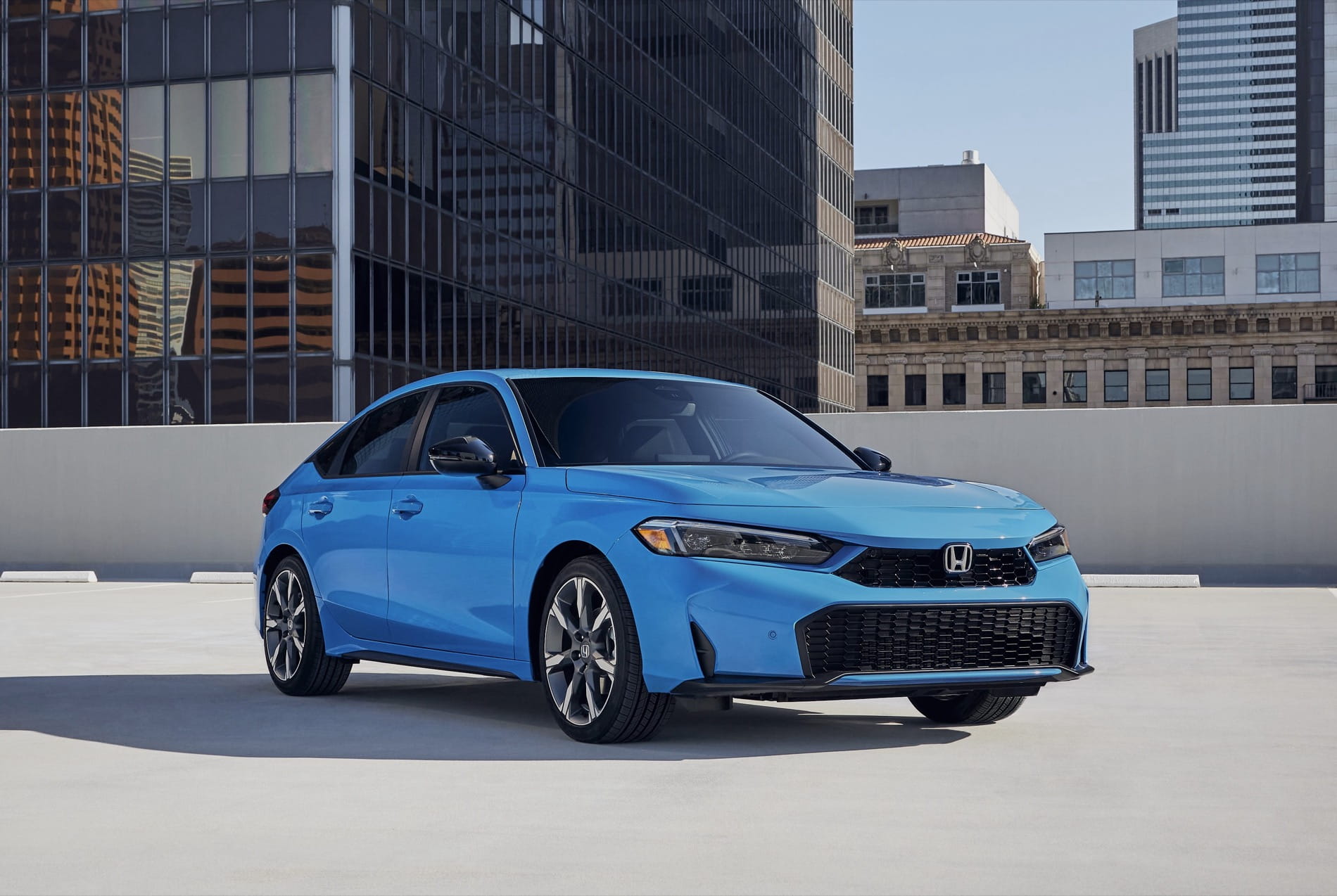
What the History of the Honda Civic Really Shows
The Honda Civic has lasted because it kept adapting while preserving its original purpose. The first Civic gave drivers a small, efficient, useful car at a time when those qualities mattered deeply. Later generations added more space, more safety, better technology, stronger performance models, hybrid power, and a more refined ownership experience.
That evolution is what makes the Civic unusual. It can be viewed as a commuter car, a first car, a flexible hatchback, a hybrid, a sport compact, or a Type R performance car depending on the generation and model. The Civic’s strength is not that every version does the same thing. Its strength is that Honda kept finding new ways to make the Civic useful, efficient, and interesting for different kinds of drivers.
For shoppers comparing Honda Civic model years today, the most important takeaway is simple: each generation has its own role. Older Civics carry historical and enthusiast appeal. More recent generations bring stronger safety, technology, refinement, and efficiency. The current Civic continues that story with sedan, hatchback, hybrid, Si, and Type R versions that give the nameplate one of the broadest identities in the compact-car segment.
View New Honda Civic Inventory View Used Honda Civic Inventory
Honda Civic History FAQ
What year did the Honda Civic first come out?
The Honda Civic launched in 1972 and arrived in the United States for the 1973 model year. The first Civic helped establish Honda’s small-car reputation by focusing on efficiency, useful packaging, and practical daily ownership.
How many Honda Civic generations are there?
The Honda Civic is currently in its eleventh generation. The Civic has evolved from a simple 1970s compact into a broad lineup that has included sedans, hatchbacks, coupes, hybrids, Civic Si models, and Civic Type R performance models.
What are the Honda Civic generation years?
For the U.S. market, the general Honda Civic generation years are 1973–1979, 1980–1983, 1984–1987, 1988–1991, 1992–1995, 1996–2000, 2001–2005, 2006–2011, 2012–2015, 2016–2021, and 2022–present.
Which Honda Civic generation is the newest?
The newest Honda Civic is the eleventh generation, which began with the 2022 model year. This generation includes modern Civic sedan and hatchback models, along with Civic Hybrid, Civic Si, and Civic Type R variants depending on model year and availability.
Which Honda Civic generation is the best?
The best Honda Civic generation depends on what you value. Older generations appeal to enthusiasts and collectors because of their light weight and simplicity. The 10th generation is popular with many used-Civic shoppers because it brought turbocharged power, hatchback availability, and the first U.S. Civic Type R. The 11th generation is the strongest fit for current shoppers who want modern safety, technology, refinement, and hybrid availability.
When did the Honda Civic Type R come to the United States?
The first Honda Civic Type R sold in the United States arrived for the 2017 model year as part of the 10th-generation Civic lineup. It gave American Honda shoppers access to a factory-built Civic performance model that had long been important to Honda enthusiasts globally.
When did the Honda Civic Hybrid return?
The Honda Civic Hybrid returned to the U.S. lineup for the 2025 model year. Its return is important because it reconnects the modern Civic with the fuel-economy mission that helped make the original Civic successful.
Is the Honda Civic still available as a hatchback?
Yes. The modern Honda Civic lineup includes hatchback models, depending on trim and model-year availability. The hatchback body style gives the Civic more cargo flexibility while keeping the manageable size and efficient character that have long defined the nameplate.
Is the Honda Civic a good car for commuting in southeastern Massachusetts?
The Civic is a strong fit for many southeastern Massachusetts drivers because it combines manageable size, efficient powertrains, practical cabin space, and lower running-cost appeal. That makes it useful for Route 44 errands, Route 24 commuting, school parking lots, and mixed suburban driving across the South Shore and South Coast.
Where can I compare new Honda Civic models near Raynham, MA?
You can compare new Honda Civic models at Silko Honda in Raynham, MA. Our team can help you understand how today’s Civic sedan, hatchback, hybrid, Si, and Type R availability fits your driving needs, budget, and ownership priorities.
Learn More About the Honda Civic at Silko Honda
If you’re comparing Honda Civic generations, researching Civic model years, or deciding how today’s Civic fits your driving needs, Silko Honda can help make the lineup easier to understand. Our team works with Civic shoppers from Raynham, Taunton, Brockton, the South Shore, the South Coast, and nearby southeastern Massachusetts communities who want practical answers about efficiency, space, technology, performance, and long-term value.
Silko Honda is located on Route 44 in Raynham and has deep Honda roots, with family ownership dating back to 1962 and Honda representation since 1973. That history matters on a page like this because the Civic itself has been part of Honda’s American story for decades. Whether you’re interested in the current Civic, comparing Civic Hybrid options, or simply learning why the Civic name has lasted so long, our goal is to make the information clear and useful.
Ownership value also matters. With SilkoCare Plus, eligible new Honda shoppers can receive complimentary lifetime powertrain coverage, buy-one-get-one-free oil changes, and free car washes for the life of ownership. That value story supports the same practical thinking that has made the Civic appealing for generations: smart ownership, long-term usefulness, and confidence beyond the first test drive.
Disclaimers:
*This article is intended as a general historical and shopping reference for Honda Civic generations, model years, and major nameplate milestones. Model-year ranges, body styles, trim availability, engines, features, fuel-economy ratings, and market availability may vary by country, region, trim level, production timing, and source. U.S.-market model-year framing is used where applicable.
*Images are for illustrative and historical-reference purposes only. Vehicle appearance, equipment, colors, and availability may vary. If stock images, archival images, or representative Civic images are used, they may not depict the exact model year, trim, market, or equipment described in the surrounding section.
*Current Honda Civic inventory, trim availability, Civic Hybrid availability, Civic Si availability, and Civic Type R availability are subject to change. Civic Si and Civic Type R models may be supply-limited. Contact Silko Honda for the latest model availability, pricing, incentives, and SilkoCare Plus eligibility details.