Massachusetts winter tire guide
Winter Tires vs. All-Season Tires for Massachusetts Drivers
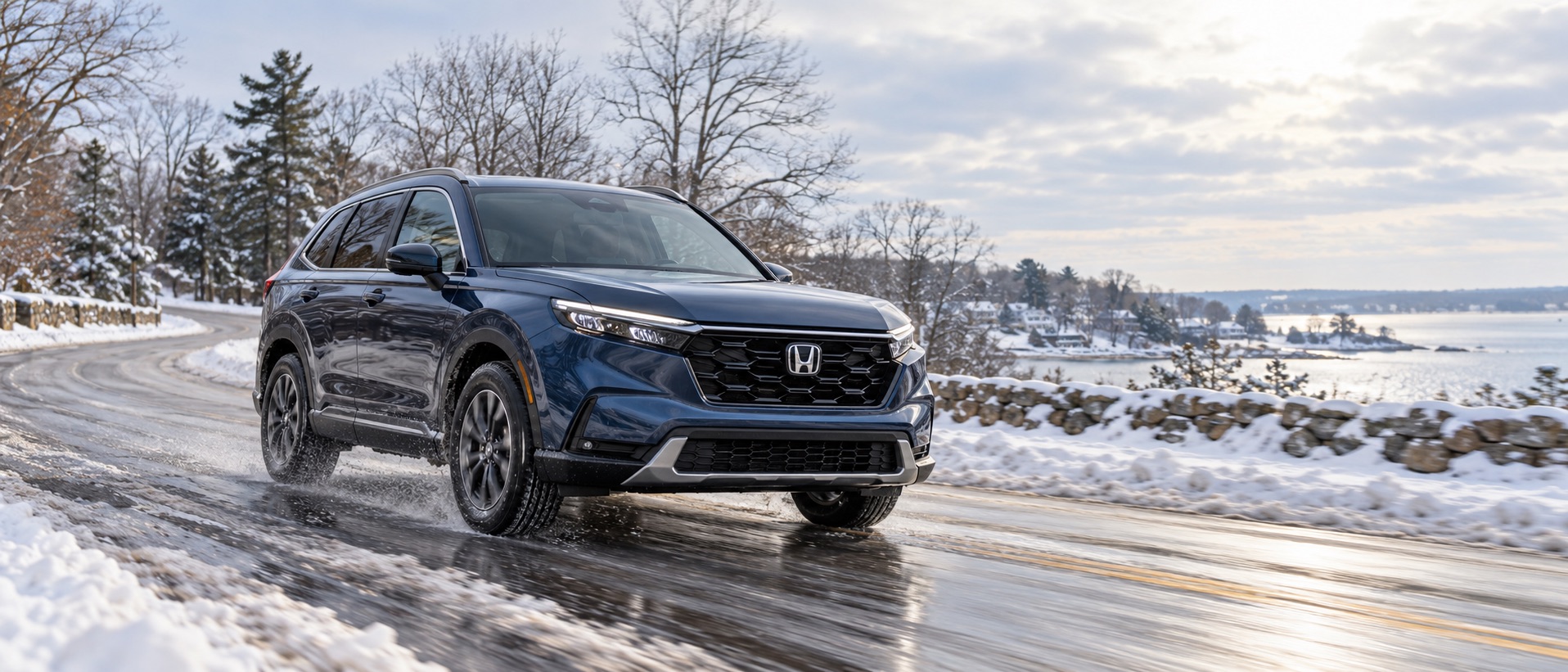
For regular Massachusetts winter driving, we recommend dedicated winter tires. They are built for the cold temperatures, snow, slush, and ice that define the hardest part of the season. All-season tires are the better fit for drivers who stay off the road during severe weather and spend nearly all of their winter miles on cleared, treated pavement.
At Silko Honda, we match the tire to your Honda, your commute, and the roads you actually drive. We verify the correct fitment, explain the traction difference, and install the setup that makes sense for your winter.
Our recommendation
Winter Tires vs. All-Season Tires: Which Is Better for Massachusetts Winters?
A tire decision gets easier once we separate the options by the conditions your Honda actually has to handle. Winter tires, all-weather tires, and all-season tires serve different jobs, and we recommend them accordingly.
Best winter traction
Winter Tires for Massachusetts Snow, Slush, and Ice
This is our recommendation when your commute continues through snow, slush, ice, early-morning cold, or roads that are not fully cleared. Winter tires use a cold-weather compound and tread design built for those conditions.
One set for the whole year
All-Weather Tires for Year-Round Massachusetts Driving
All-weather tires are the middle ground. They stay on the vehicle year-round while delivering stronger winter capability than a conventional all-season tire. We look for the Three-Peak Mountain Snowflake severe-snow rating when winter performance is the reason for choosing them.
Best for cleared-road routines
All-Season Tires for Cleared Winter Roads
All-season tires fit a winter routine built around cleared, treated pavement and staying off the road during severe storms. They deliver broad year-round performance, but they are not our first choice for regular driving through serious Massachusetts winter conditions.
Winter Tires vs. All-Season Tires: Cold-Weather Traction, Snow Performance, and Year-Round Use
The important difference is how the rubber, tread, and snow capability change when the temperature drops and the pavement gets worse.
| Tire Type | Cold Temperatures | Snow, Slush & Ice | Year-Round Use | Our Take |
|---|---|---|---|---|
| Winter | Cold-weather rubber stays flexible as temperatures drop | Strongest choice of the three for difficult winter surfaces | Seasonal; change back when warm weather returns | Our recommendation for regular Massachusetts winter driving |
| All-Weather | Built for year-round use with stronger cold-weather capability | Severe-snow-rated options provide more winter capability than conventional all-seasons | Yes | Best one-set compromise when you do not want a seasonal changeover |
| All-Season | Balanced for broad everyday conditions | Best kept to lighter winter conditions and cleared pavement | Yes | Right for drivers who avoid severe winter weather |
When Should You Put Winter Tires on in Massachusetts?
Winter tire installation timing
Install Winter Tires Around 45 Degrees F
Around 45 degrees F, the reason for a winter-specific tire becomes clearer. Dedicated winter compounds are built to stay flexible in the cold, while the rubber used in a conventional all-season tire becomes less suited to deep-winter conditions as temperatures fall.
That is why we plan winter-tire installation around sustained cold, not the first major storm. Your tires are already dealing with winter conditions on a dry, freezing morning before snow covers the road.
Spring tire changeover
When to Take Winter Tires Off in Massachusetts
Dedicated winter tires give up their advantage once warm weather settles in. Their softer cold-weather compound wears faster in sustained warm temperatures.
When Massachusetts moves out of winter temperatures, we switch the vehicle back to its warm-weather or year-round set. That preserves the winter set for the conditions it was built to handle.
AWD and winter traction
Do You Need Winter Tires With AWD in Massachusetts?
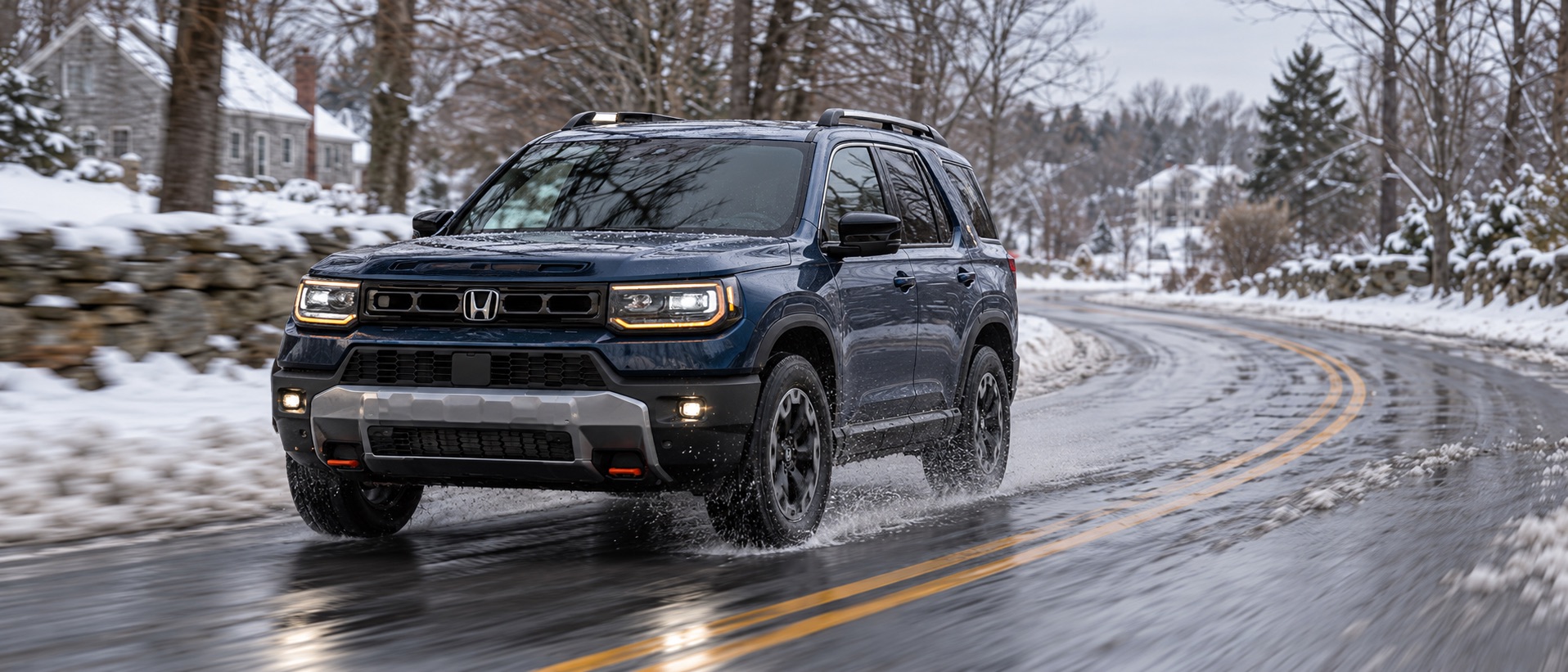
Yes, AWD does not replace winter tire traction. All-wheel drive changes how your Honda puts power to the pavement. It does not create extra tire grip when you brake into a slippery intersection or turn on a snow-covered road. Those jobs still depend on the four tires touching the pavement.
We see the same misunderstanding with AWD crossovers every winter: the drivetrain improves acceleration, so the vehicle feels confident leaving a stop. Braking and cornering expose the tire choice. That is why an AWD CR-V, Pilot, Passport, or HR-V still needs tires matched to the winter conditions it faces.
Front-wheel-drive Hondas follow the same rule. The drivetrain layout changes how power reaches the road; the tire determines the available grip at the road.
What Is the Three-Peak Mountain Snowflake Tire Rating?
Severe-snow tire rating
Three-Peak Mountain Snowflake Tires
The mountain outline with a snowflake inside it is called the Three-Peak Mountain Snowflake. Tire manufacturers and retailers often shorten that to 3PMSF.
It identifies a tire that meets a standardized severe-snow traction requirement. When we evaluate an all-weather tire for Massachusetts winter use, this is the snow rating we look for.
Mud and snow marking
M+S Tires vs. Three-Peak Mountain Snowflake Tires
M+S stands for Mud and Snow. It describes a tread classification, but it is not the same severe-snow traction standard represented by the mountain-and-snowflake symbol.
When winter traction is the priority, we do not treat an M+S marking by itself as equivalent to a severe-snow-rated tire.
Honda tire selection
How We Choose the Right Winter Tires for Your Honda
You do not need to sort through tire jargon before you come in. We handle the fitment and narrow the decision around the way you use the vehicle.
Honda Tire Size and Fitment
We verify the tire size, wheel fitment, load requirements, speed rating, and tire specifications for your vehicle before installation.
Your Massachusetts Winter Commute
A pre-dawn commute during storms requires a different tire than a routine built around waiting for plowed and treated roads.
Snow, Slush, Ice, and Highway Driving
Highway miles, neighborhood hills, secondary roads, cold rain, slush, and untreated pavement all change how much winter traction belongs under the vehicle.
Winter Tire Installation and Alignment
We install the tires and handle the supporting tire services your Honda needs, including rotation, balancing, and wheel alignment.
Why choose Silko Honda?
Ownership Benefits That Go Beyond Tire Service
Silko Care Plus Exclusive Ownership Benefits
Silko Care Plus adds exclusive ownership benefits for eligible customers, including BOGO oil changes and complimentary car wash benefits. Those extras continue adding value throughout routine Honda ownership.
Signature Silko Care Plus Powertrain Coverage
Eligible Silko Honda customers receive Signature Silko Care Plus powertrain coverage, adding long-term ownership support beyond routine maintenance and seasonal tire service.
Family-Owned and Operated Since 1962
Silko has been family owned and operated since 1962. Four generations of family ownership give our dealership deep roots in the communities we serve and a long-term commitment to the customers who return to us for sales and service.
Friends & Family Referral Program
Our Friends & Family referral program recognizes the relationships that bring new customers to Silko Honda and reflects the repeat and referral business our dealership has built across generations.
Winter tire questions
Winter Tire FAQs for Massachusetts Drivers
Schedule Winter Tire Service for Your Honda
Bring us your Honda and tell us what your winter driving actually looks like. We will verify the fitment, narrow the right tire category, explain the tradeoffs clearly, and handle the installation.