Winter vibration guide
Why Is My Car Shaking After a Snowstorm?
When your Honda starts shaking after a snowstorm, we start with the wheels. Snow and ice packed unevenly inside a wheel can throw it out of balance and create a vibration that gets stronger as road speed increases.
If the shake remains once the wheels are clear, we stop blaming the storm and inspect the vehicle. A pothole impact, tire or wheel damage, wheel balance, alignment, suspension, or braking issue can produce a similar symptom. Our job is to identify what is actually causing it so you know what needs attention and what comes next.
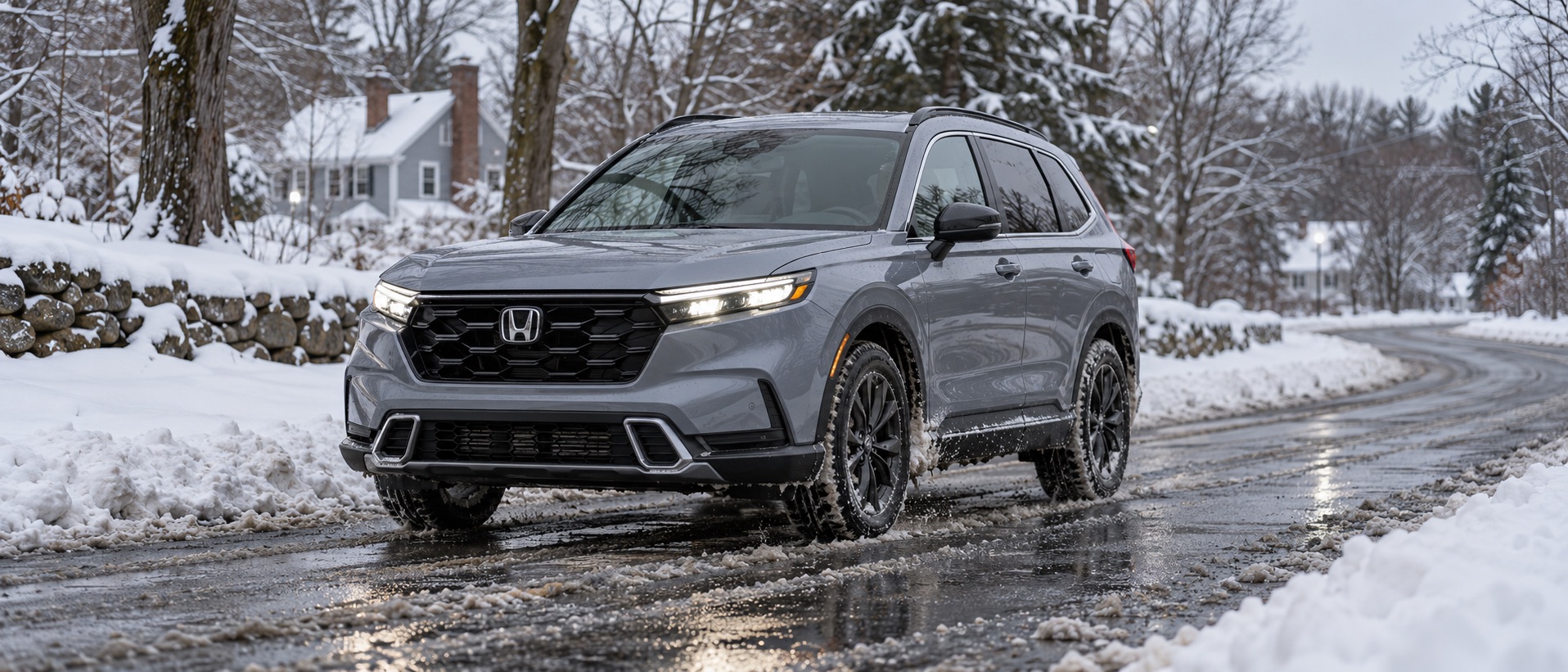
Car Shaking After Snow: Snow and Ice Buildup Is the First Thing We Check
Around Raynham, Taunton, and the Route 44 corridor, wet snow and slush can pack into a wheel and freeze after you park. If that buildup collects more heavily on one side, the wheel no longer rotates evenly. That is why your Honda can feel perfectly normal before a storm and shake on the next drive.
Common after deep snow or slush
Snow or Ice Packed Into the Wheel
When the shaking starts right after driving through deep snow or slush, we check the wheels for uneven frozen buildup first. Clearing that extra weight restores the balance if snow or ice is the only cause.
If the vibration stays
Wheel Balance or Tire Damage
If the wheels are clean and your Honda still shakes, we check the tire and wheel for damage and verify the balance. That separates a temporary storm problem from something that needs service before the vibration becomes your new normal.
After an impact
Pothole, Alignment, or Suspension Damage
Winter freeze-thaw cycles are hard on Massachusetts pavement. If the shake started after a pothole or curb hit, we inspect the tire, wheel, balance, alignment, and suspension rather than treating it as leftover snow.
Car Shaking After a Snowstorm: What Different Vibration Patterns Tell Us
We use the way the vibration behaves to decide where to start the inspection. Speed, braking, a recent pothole hit, pulling, and steering changes all give us useful information. Where you feel the shake matters too, but it does not prove that one particular front or rear wheel is responsible.
| What You Notice | What We Check | What We Recommend |
|---|---|---|
| Shaking begins immediately after driving through deep snow or slush | Snow or ice packed unevenly in or around the wheel | Clear loose visible buildup safely and recheck the vehicle on clear pavement |
| Vibration continues after the wheels are clean and dry | Wheel balance, tire damage, wheel damage, alignment, and suspension | Bring the vehicle in so we can inspect the parts that still explain the vibration |
| Shaking starts after hitting a pothole or curb | Tire and wheel damage, balance, alignment, and suspension components | Have us inspect the vehicle before treating the shake as a temporary winter issue |
| Vibration is strongest while braking | Brakes along with the related tire and wheel condition | Schedule a brake and wheel inspection so we can identify the source instead of guessing from where you feel it |
| Vehicle pulls, steering feels off-center, or handling changed after the storm | Alignment, tire condition, wheel condition, and suspension | Let us check the alignment and related components before the handling change leads to uneven tire wear or a less predictable drive |
Safe first steps
What to Do If Your Car Starts Shaking After Snow
You can rule out obvious snow buildup before scheduling an inspection. Keep the check simple and visible. If the vibration remains after that, bring the vehicle to us and let us diagnose it rather than reaching around brakes or suspension components yourself.
01
Park Somewhere Safe
Move out of the travel lane and stop on a stable, level surface before checking the wheels and tires.
02
Look for Visible Buildup
Look across the accessible face of each wheel and around the tires for packed snow or slush that has frozen in place.
03
Remove Only Loose Snow
Use a snow brush for buildup that comes away easily. Do not force tools behind the wheel or around components you cannot see clearly.
04
See What the Vehicle Does Next
If the shake disappears after the wheels are clear, buildup was the likely cause. If it stays, schedule an inspection and we will move past the snow explanation to find the source.
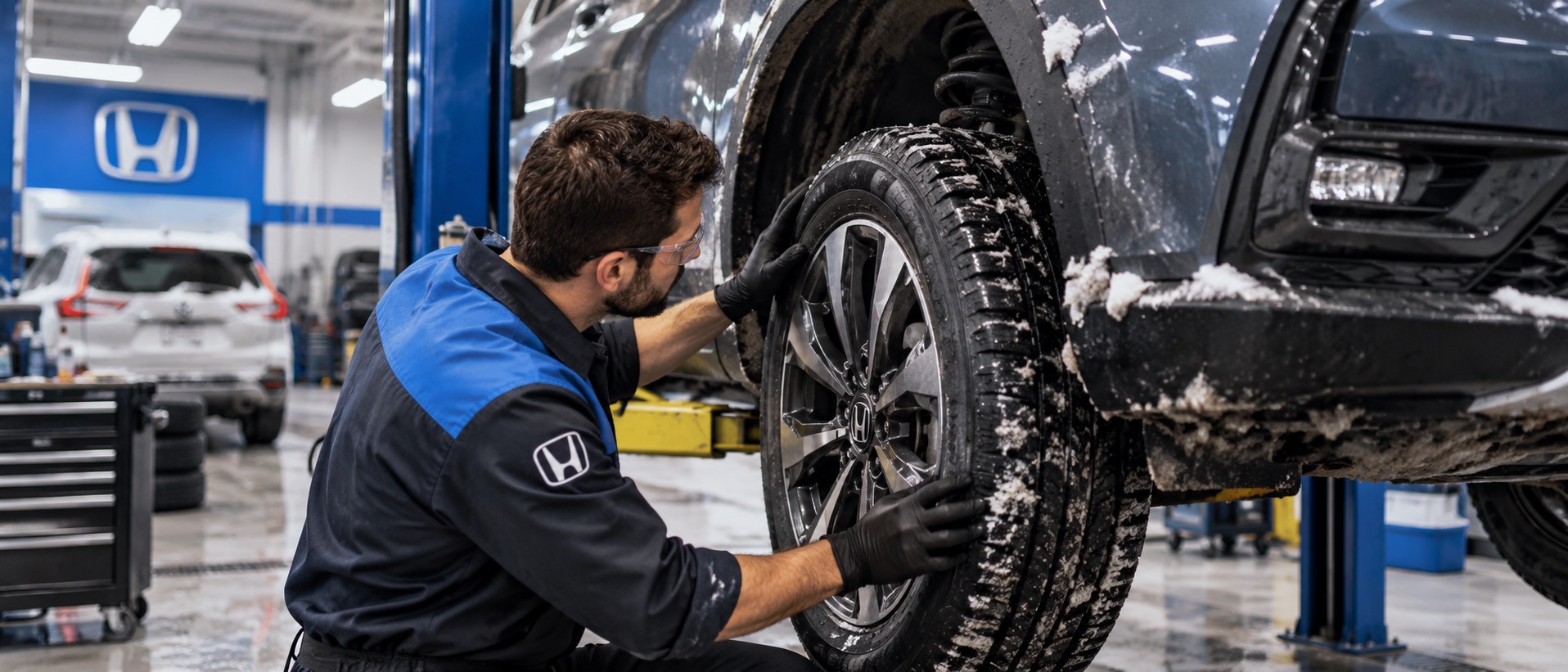
Do not ignore a major handling change
When Car Shaking After Snow Needs Immediate Attention
A mild vibration that ends when snow clears from the wheels is one thing. A Honda that feels unstable, difficult to steer, unsafe while braking, or suddenly different after a hard impact is another. In those situations, stop driving and arrange assistance rather than continuing to see whether the problem works itself out.
Visible Tire Damage
If you see a bulge, cut, exposed material, or rapidly dropping tire pressure, do not treat the shake as a snow-buildup problem. The tire needs attention before normal driving resumes.
Severe Vibration or Instability
If the vehicle wanders, steering control changes sharply, or the vibration is strong enough to affect control, park it safely and arrange assistance.
Braking or Impact Concerns
If the shake appears while braking or starts immediately after a hard pothole hit, let us inspect the vehicle before you return to normal driving.
Winter vibration diagnosis
How We Diagnose Persistent Car Shaking After a Snowstorm
When you bring the vehicle to us, we start with what changed. We ask when the vibration began, whether it grows with speed, whether braking changes it, whether you hit a pothole, and whether the shake remained after the wheels cleared. Those details focus the inspection so we can identify the source instead of replacing parts based on a guess.
Tire and Wheel Inspection
We inspect the tire for damage and abnormal wear, check the wheel, and look for anything that keeps the assembly from rotating smoothly. That tells us whether the vibration starts where the vehicle meets the road.
Wheel Balancing
We check wheel balance when the symptom points there. Correcting an imbalance restores even weight distribution around the rotating wheel so the same vibration does not follow you back onto the road.
Wheel Alignment
When your Honda pulls, the steering wheel no longer sits straight, tire wear is uneven, or the shake began after a hard road impact, we check the alignment. Correct alignment keeps the tires meeting the road as intended and protects them from unnecessary uneven wear.
Suspension and Brake Check
If the tires and wheels do not explain the shake, we move into the suspension and brakes. We identify what needs attention and explain what we found before the repair moves forward.
Can Winter Tires Prevent Car Shaking After Snow?
No. Winter tires give your Honda more appropriate traction for cold, snowy conditions, but they do not stop snow from packing inside a wheel or protect the vehicle from pothole damage. If your Honda shakes after a storm, we still need to separate a temporary wheel imbalance from tire, wheel, alignment, suspension, or brake damage.
If you are also deciding what tires belong on your Honda for Massachusetts winter driving, use our winter tires vs. all-season tires guide. We break down winter, all-weather, and all-season tires there so you can choose the setup that fits the roads and conditions you actually drive.
Why choose Silko Honda?
Four Reasons Drivers Return to Silko Honda
Silko Care Plus Ownership Benefits
Silko Care Plus gives eligible customers added ownership benefits that include BOGO oil changes and complimentary car washes. Those benefits keep delivering value after you leave the showroom and return for routine ownership needs.
Family-Owned and Operated Since 1962
Silko has been family owned and operated since 1962. Four generations have carried the dealership forward, giving you a local dealership relationship backed by decades in the communities we serve.
Serving Honda Drivers Since 1973
Our Honda history dates to 1973. That long relationship with the brand gives us decades of experience serving Honda owners through changing vehicles, technology, maintenance needs, and New England driving conditions.
Friends & Family Referral Program
Our Friends & Family referral program gives you a way to bring the people you know into the same Silko Honda relationship you already use for your own vehicle.
Snowstorm vibration questions
FAQ: Car Shaking After Snow
Still Shaking After the Snow Is Gone? Bring It to Us.
Tell us when the vibration started, whether you hit a pothole, and whether it changes with speed or braking. We will inspect the systems that match the symptom, identify the cause, and explain what needs attention so you know exactly what the next step is.
Service note: Vehicle vibration can have more than one cause. This guide is general information and does not replace a vehicle-specific inspection. If the vehicle feels unsafe to control or brake, do not continue driving.